This page collects the questions we are asked most often, including the ones people raise as objections rather than genuine curiosity. We have tried to answer honestly rather than diplomatically: some questions have settled, near-consensus answers; many do not, and we say so rather than picking a side and presenting it as agreed.
In short
- Where scholars disagree, we set out the range of views and name who holds them.
- "Is X haram?" is almost always more contested than either its critics or its advocates suggest.
- Nothing on this site is medical advice; nutrition questions link back to our fuller Nutrition and Health page.
Belief and rulings
Are you saying meat is haram?
No. This is the single most important clarification on the whole site. The overwhelming majority of Islamic scholarship, across all major schools, holds that meat from properly slaughtered permissible animals is halal, and nothing here argues otherwise as a legal claim. What we do argue is that the *tayyib* (wholesome, good) dimension of food — alongside the strictly legal halal/haram dimension — gives many Muslims reason to eat meat less often, to be more careful about its sourcing, or to choose plant-based meals more frequently, on ethical or welfare grounds that sit alongside, not instead of, the fiqh of permissibility.
Is veganism bid'ah (a forbidden innovation)?
Adopting a personal dietary practice that goes beyond what is legally required is not the kind of "innovation" the hadith literature on bid'ah is generally concerned with, which addresses innovations in matters of worship and creed. Choosing, as a personal preference, to eat less or no meat is closer in category to choosing to fast extra days or give more in charity than one is obliged to — supererogatory practice, not doctrinal innovation — provided it is not framed as a claim that meat-eating is sinful or that the Prophet's ﷺ own practice was wrong, which would be a different and more serious claim.
Can a Muslim be fully vegan and still be a good Muslim?
Yes, in the plain sense that eating a vegan diet is not, in itself, a sin, and cannot on its own make someone a lesser Muslim. Piety is assessed by belief, sincerity, worship, and character, not by diet. Some scholars raise concerns about a vegan Muslim declining to eat the meat of a valid Qurbani or a host's halal meal out of principle, seeing this as a departure from established practice; that is a genuinely debated edge case, covered in more detail on our Qurbani and Eid al-Adha page, rather than a verdict on veganism as such.
Do scholars agree on any of this?
Scholars agree, near-universally, that: cruelty to animals is prohibited; wasteful slaughter is prohibited; the correct method of slaughter matters; and moderation in food (avoiding both excess and self-neglect) is required. They disagree, sometimes sharply, on how those agreed principles apply to industrial farming, mechanised slaughter, and the ethics of reducing meat consumption as a considered lifestyle choice.
Is it a sin to eat factory-farmed meat that is technically halal-certified?
This is contested rather than settled. Certification generally verifies slaughter method, not the conditions of the animal's life beforehand. Some scholars argue that if the slaughter itself is valid, the meat is halal regardless of how the animal was raised; others argue that *tayyib* and the Prophetic emphasis on kindness to animals mean conditions of rearing are also religiously relevant, even if they do not change the technical halal status of the meat. See our Halal Certification page for the full argument on both sides.
What do the four Sunni schools say about eating meat versus abstaining from it?
None of the four Sunni schools (Hanafi, Maliki, Shafi'i, Hanbali) or the major Shi'a schools obligate the eating of meat as a matter of course; all permit it as lawful. A small number of scholars across history have discussed whether refusing all meat permanently, treating it as though it were forbidden, could be problematic, but abstaining from meat while still affirming its permissibility is not disputed as impermissible in any major school.
How can something permitted for fourteen centuries become forbidden now?
This is the most reasonable objection to the whole argument, and it deserves a straight answer rather than a dismissal. The short version: a ruling in fiqh generally attaches not to an abstract category but to a described state of affairs (mawdu'), and a well-known principle holds that a ruling can change when the subject it addresses changes materially (al-hukm yataghayyar bi-taghayyur al-mawdu'), even while the underlying textual sources stay exactly the same. A commonly cited example is water: the ruling that water remains pure unless its taste, colour, or smell is altered is a stable principle, but whether a specific body of water counts as pure depends on its actual current state, not on how it was a generation ago. Meat, dairy, and eggs were judged permissible in a context of small-scale, largely free-living animal husbandry; the argument this site surveys is not that the Qur'an or hadith on lawful food have changed, but that the industrial system producing today's meat, milk and eggs may be different enough in kind from that context to warrant asking the question afresh, the way any change of circumstance can. The closest and most-cited precedent for a ruling shifting this way is tobacco: absent from the earliest Islamic sources entirely, tobacco was initially treated by many scholars as permissible or merely disliked, and only came to be widely ruled haram or strongly discouraged once accumulating medical evidence of serious harm changed what scholars understood themselves to be ruling on. Importantly, tobacco did not become forbidden because the Qur'an changed; it became forbidden, in the view of those who so ruled, because the facts about it changed the application of an unchanging principle (that a substance causing serious harm to oneself is not permitted). It is worth being honest about the limits of this reasoning as applied to modern livestock. Turning-with-its-subject is a real and accepted principle, but applying it to today's food system, as the open letter and the wider case set out on The Whole Argument, Step by Step do, remains a minority argued position rather than an established ruling from any named jurist or fiqh council, and its proponents themselves generally frame the conclusion as conditional: reversible if husbandry practices, and the case for necessity, were to change. Treat it as a serious argument worth weighing, not as settled law that fourteen centuries of scholarship somehow missed.
Someone sent me a letter saying meat is now haram — is it?
You are probably describing an anonymous Persian document, circulated as a PDF, titled (in translation) An Open Letter to Shia Muslims on the Livestock Industry, Animal Suffering and Moral and Legal Duty Today. We think it is worth taking seriously and answering honestly rather than dismissing, so we cover it at length on a dedicated Open Letter page. In short: the letter argues that legal maxims already accepted in fiqh — that serious harm forbids a thing (la darar wa la dirar), that causing animals needless pain (idha') is forbidden, that a ruling changes when the reality it addresses changes, and that assisting wrongdoing (i'anah 'ala al-zulm) is forbidden — together mean that meat, dairy and eggs produced by the modern industrial livestock system are now haram, because that system bears no real resemblance to the free-range, small-scale animal husbandry the classical rulings on permissibility were made about. It explicitly calls its own conclusion a personally "deduced" verdict, not a fatwa from any named jurist, marja' or hawza institution, and it has no standing beyond that. No major Sunni or Shia authority has ruled meat, dairy or eggs categorically haram on these grounds, and the overwhelming mainstream position, across schools, remains that they are lawful. The letter's case also leans on some claims a fair reader should be sceptical of: several of its hadith citations are loosely or doubtfully attributed (its central line about meat and wine, for instance, is usually traced to 'Umar in Sunni sources rather than to the passage of Nahj al-Balagha it cites), and some of its scientific claims — that animal products are "more dangerous than cigarettes", or that dairy is directly linked to prostate and breast cancer — go well beyond what current evidence supports, even though its underlying point that industrial animal agriculture causes real animal suffering and real environmental harm is well founded. Treat it as a serious piece of advocacy, worth engaging with conscience and reason, not as a ruling.
Shia fiqh and animal rights
Does Shia fiqh say animal cruelty is forbidden?
Yes, clearly, though this is a distinct question from whether eating meat is forbidden. A detailed academic study by Mohsen Javadi and Asghar Masoudi, "Animal Rights from the Islamic Perspective" (2013), surveys Imami sources on exactly this and documents a consistent position: causing an animal unnecessary pain — beating, branding on the face, mutilation, overloading, milking with long nails, terrifying an animal at slaughter — is repeatedly condemned in hadith attributed to the Prophet ﷺ and the Imams, and jurists such as al-Najafi (Jawahir al-Kalam) and Shahid al-Thani (Masalik al-Afham, al-Rawda al-Bahiyya) treat an animal's maintenance — food, water, shelter, even medical care — as legally obligatory on its owner, extending even to animals whose meat is unlawful to eat. Imam 'Ali's instructions to his zakat collectors, preserved in Nahj al-Balagha, are unusually specific: do not separate a nursing camel from her young, do not milk her dry, do not overburden or exhaust the herd. None of this amounts to a prohibition on eating meat as such; the study assumes lawful use, milking and slaughter throughout. It is a study of obligations owed to animals within a framework that already treats meat as permissible, not an argument against eating it.
Do animals have rights in Islamic law?
According to the Javadi–Masoudi study, yes, and in a specific and rather distinctive sense. Animal rights are counted among the huquq Allah, claims of God rather than merely of the animal's owner, which is why a person cannot simply decide an animal does not need feeding. The study makes a genuinely striking argument here: unlike a human rights-holder, who can forgive a wrong done to them, an animal cannot waive its own right (qabil-e isqat nist); the only way the obligation is discharged is by actually performing it. The study is also careful to say that "animal rights" does not mean rights identical to human rights — animals do not need political institutions, they need freedom, adequate space, natural food and the company of their own kind — and that respecting those rights does not require liking animals, only refraining from violating their natural needs. Our Animal Rights in Islamic Law page sets this out in full, alongside the classical fiqh positions (on feeding a deposited animal, on giving water to a thirsty animal over one's own wudu, and more) that the study draws together.
Is dairy really implicated?
The open letter's chapter on the dairy industry is arguably its strongest ethical material and its weakest scientific material, and it is worth separating the two. On the ethical side, the letter's description of standard industrial dairy practice — calves removed from their mothers within hours of birth, cows forced into near-continuous pregnancy to keep milk flowing, culling of male calves not needed for dairy — is broadly accurate as a description of how much of the industry works, and it is fair for the letter to set that against hadith and reports (attributed to the Imams and to Imam 'Ali's instructions on livestock) that explicitly forbid separating a nursing animal from her young. On the scientific side, the letter's claim that dairy is directly linked to prostate and breast cancer overstates a genuinely contested area of nutritional epidemiology; the evidence here is mixed and far weaker than, for example, the well-established WHO/IARC classification of processed meat as a Group 1 carcinogen and red meat as a Group 2A ("probably") carcinogen, which our Nutrition and Health page discusses in more detail. So: dairy is implicated as a serious animal-welfare question, on grounds the tradition itself supplies; it is not currently implicated as an established cancer risk in the way the letter suggests.
Scripture and evidence
Doesn't the Qur'an clearly permit eating animals?
Yes, unambiguously. Verses including 16:5-8, 40:79, and 5:1 explicitly grant permission to use livestock, including for food, and describe this as a favour from God. This site does not dispute that permission exists; it explores what else the text says about how that permission should be exercised.
Are there hadith that specifically praise vegetarianism?
No authentic hadith commends a wholly meat-free diet as such, and it would be dishonest to claim otherwise. There are authentic hadith praising mercy to animals broadly (e.g. Sahih al-Bukhari 2363 on the man who gave water to a thirsty dog) and describing the Prophet's ﷺ generally modest, often meat-light diet as a matter of historical record, but neither amounts to a prescriptive call to vegetarianism.
Did the Prophet ﷺ eat meat regularly?
Historical accounts suggest the Prophet ﷺ ate meat when available, particularly at gatherings and on specific occasions, but that meat was not a daily staple of his diet by the standards of a modern industrialised food system, reflecting the general scarcity and cost of meat in seventh-century Arabia rather than a deliberate dietary philosophy.
What does 'tayyib' actually mean, and is it just a synonym for halal?
No. Tayyib means wholesome, pure, or good, and the Qur'an consistently pairs it with halal ("halal and tayyib", e.g. 2:168, 5:88), suggesting two distinct qualities: lawful status and intrinsic goodness or wholesomeness. Something can be technically halal while raising tayyib concerns — heavily processed, unhealthy, or produced through practices many scholars consider harmful.
Is there a hadith that says animals will have their rights returned on Judgement Day?
Yes; Sahih Muslim 2582 records the Prophet ﷺ stating that rights will be restored on the Day of Resurrection, including between animals, giving the example of a hornless sheep being avenged against a horned one. This is a genuinely striking and authentic hadith, and it is frequently cited, correctly, as evidence that animals have a moral standing beyond pure utility in Islamic thought.
Practice
How do I start eating more plant-based meals without a big dramatic switch?
Most people who sustain the change do it gradually: start with meat-free days, lean on existing legume-based dishes in your own cuisine rather than unfamiliar substitutes, and treat it as an adjustment to proportions rather than an identity change. See our Getting Started page for a fuller walkthrough.
What do I do at Eid al-Adha if I don't want to eat the Qurbani meat myself?
Many Muslims in this position still participate in or fund a Qurbani, since the act centres on obedience and charitable distribution to those in need rather than personal consumption, and give their own share away rather than eating it. This is a widely accepted accommodation; see our dedicated Qurbani and Eid al-Adha page for the fuller discussion, including differing views on whether declining the meat entirely is advisable.
Is it disrespectful to decline meat at someone's home?
It can come across that way if handled bluntly, but it does not have to. Framing the choice in terms of your own dietary practice rather than a judgement on the host's food, offering to bring a dish, or eating the non-meat parts of a meal graciously are all well-established ways of managing this without causing offence.
Are all supplements and processed foods with E-numbers haram?
No. E-numbers are simply a European coding system for additives and include many that are entirely plant-derived or synthetic. Only some, such as E120 (cochineal) and E441 (gelatine), are reliably or often animal-derived. See our Kitchen and Shopping page for a fuller breakdown.
Can I still perform Qurbani if my family is mostly vegetarian?
Yes; Qurbani is a distinct ritual obligation (for those who meet the conditions) tied to the story of Ibrahim and Isma'il, not a statement about ordinary daily diet, and most scholars treat it as a separate question from everyday dietary practice.
Family and community
My spouse eats meat and I don't — how do we manage this?
Many mixed-diet households manage this successfully by cooking shared bases (a grain, a vegetable dish, a sauce) and adding meat separately for those who want it, rather than cooking two entirely separate meals every night. See Family and Community for a fuller treatment, including how to navigate this with children.
Will my children be nutritionally deficient if I raise them vegetarian or vegan?
Not if the diet is planned properly; major dietetic bodies consider well-planned vegetarian diets appropriate at all life stages, and vegan diets appropriate for children with more careful supplementation and monitoring, ideally alongside a paediatrician or dietitian. See our Nutrition and Health page, and do not rely on this page alone for that decision.
How do I talk to my parents about wanting to eat less meat for ethical reasons?
Framing it around tayyib, mercy to animals, and health rather than around the implication that their own lifelong diet was wrong tends to go better; many parents raised in meat-scarce contexts associate meat with hospitality and provision, and hearing the change read as a rejection of that care can cause more friction than the food itself.
Is it acceptable to raise this as a community or mosque discussion topic?
Yes, and a growing number of mosques and Islamic student societies host exactly these conversations, often framed around khalifa (stewardship), Qurbani ethics, or halal certification standards rather than as a vegan-versus-meat-eater debate.
Health
Is a vegan diet actually healthy, or is this just an ideological claim?
The mainstream clinical position, reflected in statements from bodies such as the Academy of Nutrition and Dietetics and the British Dietetic Association, is that a well-planned plant-based diet is nutritionally adequate and can be healthy at every life stage, with specific supplementation (particularly B12) required. "Well-planned" is doing real work in that sentence; poorly planned versions of any diet, plant-based or not, can be unhealthy.
What is the one supplement I absolutely cannot skip on a vegan diet?
Vitamin B12. It has no reliable plant source, and deficiency develops slowly and can cause serious, sometimes irreversible harm. See Nutrition and Health for detail.
Can athletes and pregnant women safely eat plant-based?
Generally yes with proper planning, but both groups have raised nutrient demands and benefit from professional dietetic input rather than general online guidance; see Nutrition and Health for specifics and please consult a clinician directly.
Sustainability
Is factory farming really that environmentally damaging, or is this exaggerated?
Industrial livestock agriculture is widely documented by bodies such as the FAO and IPCC as a significant contributor to land use, freshwater use, and greenhouse gas emissions globally, though the precise scale of its contribution relative to other sectors is debated among researchers and depends heavily on methodology and system boundaries. It is fair to describe it as a major factor without citing a single precise figure as if it were beyond dispute.
Does Islam actually say anything about environmental stewardship, or is this a modern add-on?
The Qur'anic concept of khalifa (trusteeship) and the prohibition on israf (wasteful excess) are textually old, not modern inventions, though applying them specifically to industrial-scale environmental questions is a genuinely modern exercise, since the scale of contemporary ecological damage did not exist historically. See Khalifa and Climate for the full argument.
Is it hypocritical to worry about factory farming while still eating meat sometimes?
No more hypocritical than holding any ethical position imperfectly; most serious ethical frameworks, religious or secular, distinguish between an ideal and the practical steps toward it, and reducing consumption or being selective about sourcing are both meaningful even short of eliminating meat entirely.
Do changing facts change every ruling?
No. Changed facts can alter the application of an existing rule, but the passage of time does not cancel a text. If a specific harm, theft or death before slaughter is established, the inquiry concerns that condition and its consequences. Calling an industry modern is insufficient to establish a legal impediment. An argument must explain what changed, how it was established, why it affects the ruling, and whether the consequence concerns an act, a product or participation in harm.
Does the tobacco analogy prove animal products are forbidden?
No. It illustrates that empirical knowledge can inform the application of harm principles. Many scholars' assessments of tobacco changed as its risks became clearer, but that does not make every food equivalent to tobacco. Evidence strength, exposure, nutritional role and alternatives differ. Even processed meat's carcinogen classification does not make its risk equal to smoking. The analogy raises a methodological question rather than supplying a verdict on all dairy, eggs and meat.
How can I act with incomplete information or limited alternatives?
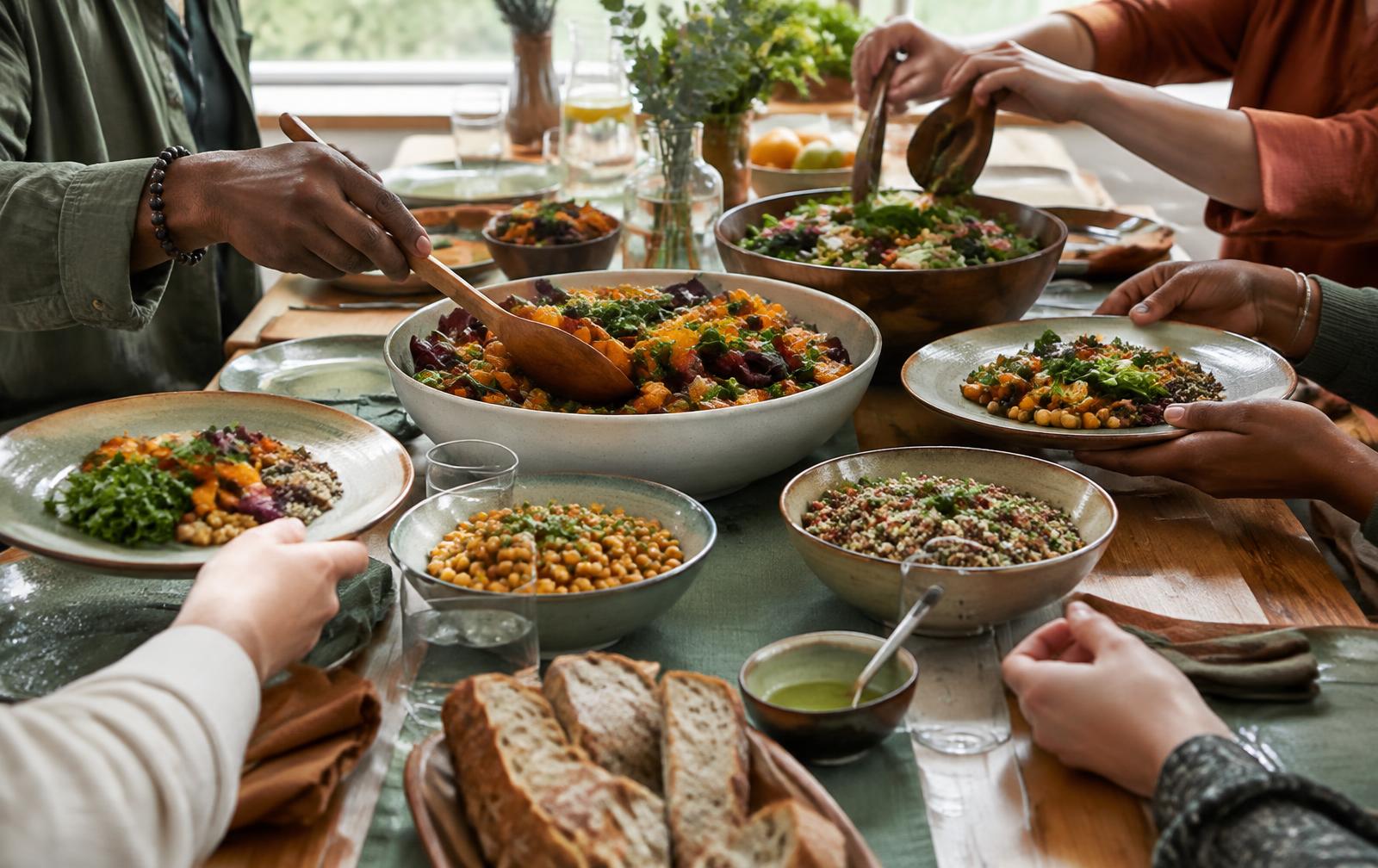
Begin with an answerable question rather than the broadest accusation. You can request the standard or farm policy, choose more plant-based meals, or support better institutional purchasing. Alternatives may be limited by allergies, income or dependence on household food. Those circumstances matter to capacity and responsibility; they neither make mercy meaningless nor justify one judgement for everyone. Gradual change can be serious without claiming perfection.
Do animal duties differ between Sunni and Imami law?
Both traditions recognise care and obligations toward animals in human custody. Their methods for assessing reports and details of slaughter, purity and rulings are not identical. Javadi and Masoudi's study describes duties in Imami sources; this does not automatically authenticate every report or turn every conclusion into consensus. Ask a scholar how those duties apply to the facts you describe, rather than which whole tradition is categorically more compassionate.
Must I choose between environment, animals and health?
Often several concerns can improve together, but one measure is not a substitute for another. A lower-emissions product may raise welfare concerns, a plant alternative may not meet your nutritional needs, and local does not always mean lower impact. Compare available options using the relevant question for each, avoiding absolute rankings without a measurement method. See Nutrition and Health and Khalifa and Climate.
A specific question is better than a slogan
Record the product, what you know, what remains unknown and your circumstances. That makes a scientific or legal consultation answerable, instead of conflating ordinary lawfulness, a supplier's practice and your personal choice.
Research trail
Sources and further reading
- 01Qur'an 5:1, 5:3, 5:5, 6:118-119, 6:145 — the core legislative verses on lawful and unlawful food
- 02Sahih al-Bukhari 52; Sahih Muslim 1599 — hadith of al-Nu'man ibn Bashir on halal, haram, and doubtful matters
- 03al-Qaradawi, al-Halal wal-Haram fil-Islam — widely used modern reference on lawful and unlawful matters generally
- 04Sarra Tlili, Animals in the Qur'an (Cambridge, 2012) — academic study underlying several answers on animal ethics
- 05al-Hafiz Basheer Ahmad Masri, Animal Welfare in Islam (Islamic Foundation, 2007) — the standard modern Muslim work specifically on animal welfare
- 06Richard Foltz, Animals in Islamic Tradition and Muslim Cultures (Oneworld, 2006) — comparative source on animals across Islamic history and law
- 07British Dietetic Association and NHS guidance on vegan and vegetarian diets — underlies health-related answers
- 08IPCC and FAO reports on livestock and land/water use — underlies sustainability-related answers, cited qualitatively rather than with invented statistics
- 09Fiqh councils and contemporary fatwa bodies (e.g. Dar al-Ifta al-Misriyyah, European Council for Fatwa and Research) — examples of institutional voices referenced on contested rulings
- 10Ibn Qudama, al-Mughni — classical Hanbali fiqh reference used on necessity and moderation
- 11An Open Letter to Shia Muslims on the Livestock Industry, Animal Suffering and Moral and Legal Duty Today (Persian, anonymous; translations ours) — an anonymous advocacy letter, not a fatwa, discussed in full on our Open Letter page
- 12Mohsen Javadi and Asghar Masoudi, "Animal Rights from the Islamic Perspective" (Persian), Pazhuhesh-ha-ye Akhlaqi 4:2 (Winter 1392 SH / 2013), 21-48 — a Qom-milieu academic study of animal rights in Islamic law; assumes lawful slaughter and is not a vegetarian argument
References are given so readers can check them in the primary sources. Hadith gradings and scholarly positions are summarised in good faith; where a text is disputed we say so. Verify before you rely on anything here.
Follow the thread
Continue reading
Share this page