Halal meat is meat from a permitted animal that has been slaughtered in the manner Islamic law requires: the animal is alive and not already injured to the point of death, the name of God is pronounced over it, and a sharp blade is drawn swiftly across the throat, cutting the windpipe, gullet and the major blood vessels so that the blood drains. Pork, blood, carrion, and animals dedicated to anything other than God are excluded regardless of how they are killed.
That is the answer most people are looking for. The rest of this guide covers what the answer leaves out — because a great deal of what Muslims care about when they buy meat is not, in fact, what the word "halal" on a package certifies.
In short
- Halal meat requires a permitted species, a living and healthy animal, the invocation of God's name, and a swift cut with a sharp blade that drains the blood.
- Pork, blood, carrion, animals killed by strangling or a fall, and animals dedicated to other than God are excluded by explicit Qur'anic text.
- Certification typically verifies species, slaughter method, invocation and ingredients — not how the animal lived.
- Stunning is the single largest point of practical disagreement between certifiers and scholars.
- Halal answers the question of lawfulness; tayyib — wholesomeness — is a second Qur'anic criterion many Muslims argue is being neglected.
The conditions of halal slaughter
Jurists across the schools state the requirements in slightly different orders, but the substance is broadly agreed. Four conditions concern the animal, the slaughterer, the invocation and the cut itself.
- 01
A permitted animal
Cattle, sheep, goats, camels, poultry and game birds are permitted. Pigs are excluded by text; predators with fangs and birds of prey are excluded in most schools.
- 02
Alive and sound
The animal must be alive at the moment of the cut and not already dying from injury, disease, strangulation or a fall. Carrion is forbidden in all circumstances.
- 03
The name of God
Bismillah, usually with Allahu akbar, is pronounced over the animal. Schools differ on whether deliberate omission invalidates the meat or merely makes it blameworthy.
- 04
A swift, clean cut
A sharp blade severs the throat, windpipe and jugular vessels in one motion. The blade is sharpened out of the animal's sight, and the blood is allowed to drain.
The order of the steps is not itself a legal requirement; the conditions are cumulative.
God has prescribed excellence (ihsan) in all things. So if you kill, kill well; and if you slaughter, slaughter well. Let each of you sharpen his blade and spare the animal he slaughters.
The hadith is significant beyond its practical instruction. It frames slaughter as an act subject to a standard of excellence, not merely a permission to be exercised. Much of the contemporary argument about industrial slaughter turns on whether a line running thousands of birds an hour can meet that standard even when every formal condition is technically satisfied.
What is excluded
The Qur'an lists the categories of forbidden food directly, and the list is short.
Forbidden to you are carrion, blood, the flesh of swine, and that over which any name other than God's has been invoked; and the animal strangled, or beaten to death, or killed by a fall, or gored, or savaged by a beast of prey — unless you are able to slaughter it — and that which is sacrificed on stone altars.
Everything not excluded is, in principle, permitted. This is the general legal presumption of ibaha: things are lawful until a text or a valid analogy makes them otherwise. It is a generous default, and it is also the reason arguments that a particular modern product has become forbidden carry a heavy burden of proof.
Halal, kosher and food of the People of the Book
Qur'an 5:5 permits "the food of those who were given the Scripture". Scholars have long differed over how far this extends to meat from contemporary Jewish and Christian sources: many treat properly prepared kosher meat as permissible, while positions on conventionally slaughtered Western meat range from permitted to prohibited depending on how each jurist weighs the invocation requirement and the actual method used. If this question matters to your daily shopping, it is exactly the kind of thing to put to a scholar who knows your school and your country's supply chain.
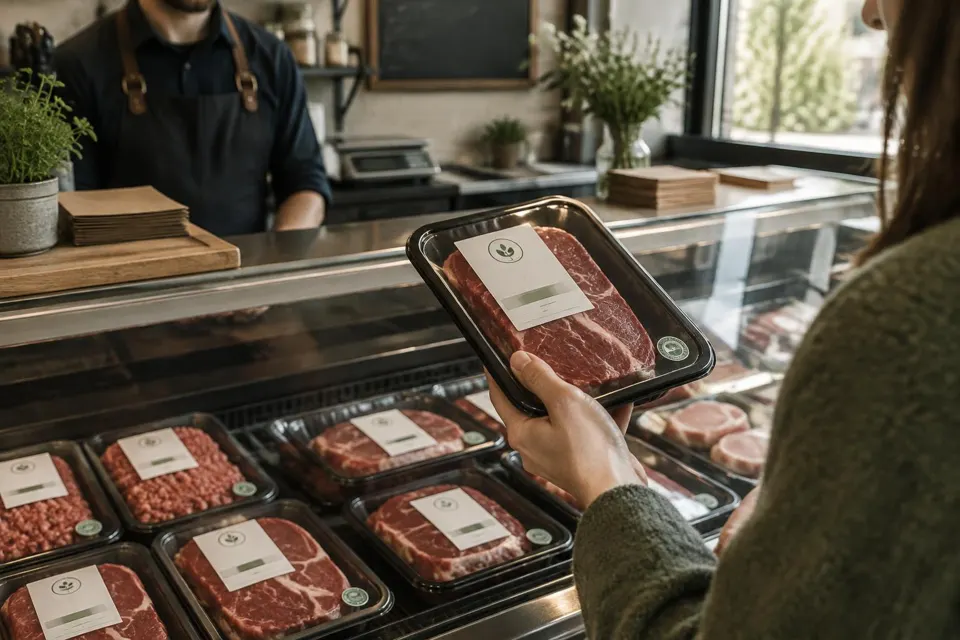
What a halal label verifies
Certification bodies are private or semi-public organisations that inspect facilities and license the use of a mark. Their standards vary — Malaysia's MS 1500 and the Gulf GSO standards are among the most detailed — but their scope is narrower than most shoppers assume.
The gap that produces most of the confusion
The stunning disagreement
Stunning permitted
Reversible stunning is compatible with dhabihah
If the animal would recover were it not slaughtered, it is alive at the cut and the conditions are met. Proponents argue stunning reduces struggle and injury and better serves ihsan on fast lines.
Stunning rejected
Only an unstunned cut is reliably valid
Critics note that stunning sometimes kills, particularly with electrical water baths and captive bolts, making the animal carrion before the cut. Given the uncertainty, they invoke precaution and avoid it.
Case by case
Species and method decide
Several certifiers accept low-voltage electrical stunning for poultry while rejecting captive bolt for cattle, and require post-stun monitoring to confirm the animal is alive.
Because certifiers take different positions, two packages in the same shop can both be marked halal while representing meaningfully different practices. Reading the specific certifier's standard, rather than the mark alone, is the only way to know which you are buying.
Halal is not the same as tayyib
Repeatedly, the Qur'an joins the two words: eat what is halalan tayyiban, lawful and wholesome. Classical exegetes read tayyib along a spectrum. Al-Tabari treats it as close to a synonym for what is not forbidden; al-Qurtubi allows a broader sense of cleanliness and goodness; modern exegetes such as Ibn 'Ashur read it as encompassing benefit and the avoidance of harm.
The practical consequence is real. If tayyib is legally operative, then a product can be formally lawful and still fall short of what the verse asks. If it is primarily hortatory, it recommends better choices within the lawful category without narrowing it. Both readings have serious scholarly support, and this site does not pretend the question is settled. It is treated at length in our essay on halal and tayyib.
The questions modern production raises
Nothing in the classical definition of halal anticipated a shed of forty thousand birds bred to reach slaughter weight in five weeks, or a dairy herd in which calves are removed from their mothers within a day of birth. The rules were written for an agriculture in which the animal's life was visible to the person who ate it.
Muslims respond to that gap in different ways. Some hold that the ruling attaches to the slaughter and the species, and that welfare failures are sins on the producer without rendering the meat unlawful. Others argue that when the prophetic prohibitions on striking, branding, mutilating, overloading, frightening and separating mothers from their young are systematically violated as a condition of production, the resulting product cannot be described as wholesome, and precaution counsels avoidance. Both positions are argued in good faith by people who take the texts seriously.
Where to go next
Common questions
Is all meat in a Muslim-majority country automatically halal?
No. Imported meat, food-service supply chains and processed products containing gelatine or animal-derived enzymes all raise separate questions, and enforcement of national standards varies widely.
Does machine slaughter count?
Contemporary fiqh academies and certifiers are divided. Some accept mechanical blades with a recorded or continuously pronounced invocation and a Muslim supervising the line; others require an individual invocation over each animal by a human slaughterer.
What about seafood, gelatine and rennet?
Most schools permit fish without slaughter, though positions differ on other sea creatures. Gelatine and rennet depend on their source and on whether chemical transformation (istihala) is accepted as purifying — another point of genuine school-to-school difference.
Is plant-based food automatically halal?
Generally yes, apart from intoxicants and cross-contamination, which is why many Muslims find plant-based products simplify a shopping trip rather than complicate it. That is a convenience argument, not a religious ruling.
This guide is educational. It sets out positions and their evidence rather than issuing rulings; for a decision that binds you, ask a qualified scholar who knows your school and your circumstances.
Research trail
Sources and further reading
- 01Qur'an 2:173, 5:3, 5:5, 6:118–121, 16:115 — the core verses on permitted and forbidden foods and on pronouncing God's name
- 02Qur'an 2:168, 5:88, 16:114 — the halal-and-tayyib pairing
- 03Sahih Muslim 1955 — the hadith of ihsan in all things, including slaughter, and sharpening the blade
- 04Sahih al-Bukhari, Kitab al-Dhaba'ih wa'l-Sayd — prophetic reports on slaughter, hunting and the invocation
- 05Yusuf al-Qaradawi, al-Halal wa'l-Haram fi'l-Islam — widely used modern synthesis of the rules of lawful food
- 06Codex Alimentarius, General Guidelines for Use of the Term 'Halal' (CAC/GL 24-1997) — international reference definition used by many certifiers
- 07Malaysian Standard MS 1500 and GSO 2055-1 (Gulf standard) — two of the most influential national and regional halal standards
- 08European Council for Fatwa and Research; Islamic Fiqh Academy resolutions on slaughter — representative contemporary positions on mechanical slaughter and stunning
- 09Al-Hafiz Basheer Ahmad Masri, Animals in Islam — classic Muslim critique of modern production conditions from within the tradition
References are given so readers can check them in the primary sources. Hadith gradings and scholarly positions are summarised in good faith; where a text is disputed we say so. Verify before you rely on anything here.
Follow the thread
Continue reading
Share this page