Practice
A Halal Guide to Plant-Based Eating
Getting Started sets out the ethical case and Kitchen and Shopping covers the store cupboard. This page goes one layer deeper: how to actually build meat-, dairy-, and egg-free versions of the dishes Muslim households already cook, and how to think through the halal-specific questions that plant-based products raise — alcohol in flavourings, animal-derived processing aids, and what a vegan label does and does not tell you.
Preserving a dish's character
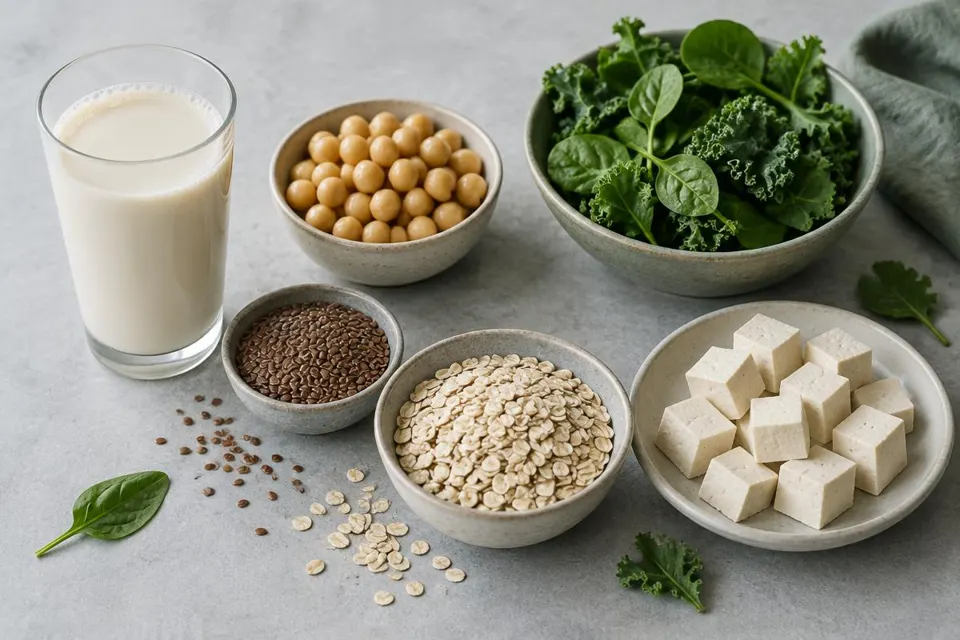
Start with what gives a dish its identity: browned onions, spices, acidity and cooking method. Not every dish needs a meat-shaped piece. Mujadara, ful and dal are complete culinary traditions in their own right; kofta needs structure, while a tagine needs a balanced sauce. Ask which elements the family values before replacing the centrepiece. Preserving lemon and garlic or crisp onions may matter more than reproducing meat's texture exactly.
These are cooking adaptations, not claims that the original recipes are vegan. For example, imam bayildi is traditionally a plant-based aubergine dish, whereas the related karniyarik has a meat filling; distinguishing them respects culinary identity. Walnuts can suit fillings but not nut allergies. An expensive imitation should not be a prerequisite for participation: a well-made pulse dish may work better.
A shopping plan without waste
Compare the cost of the portion actually eaten, not just the packet price. Dry lentils require time and cooking fuel; tins save both but may cost more. Bulk buying only saves money if you can store and use it. Choose two protein staples for the week, grains that work in several dishes and seasonal or frozen vegetables. Plan how to use leftovers before buying an unfamiliar substitute.
- 01
Check the pantry
Choose ingredients that need using soon.
- 02
Build the meal
Pulses or tofu, grains and vegetables.
- 03
Change the format
Chickpeas in a stew, then in a wrap.
- 04
Store safely
Cool leftovers promptly and follow local food-safety guidance.
Cooking success is not nutritional adequacy. A plant drink or cheese may suit a recipe while offering little protein or no calcium fortification. Read the label and plan a reliable B12 source for a fully vegan diet. Children, pregnancy and medical conditions need individual nutrition guidance: a colourful plate photograph does not demonstrate that requirements are met.
Why did the substitute fail?
If kofta falls apart, check lentil moisture and binding, then let the mixture firm up before cooking. If tofu tastes bland, brown its surface before adding sauce rather than dropping it raw into excess liquid. If a plant drink splits in tea, try another formulation or gentler heat: ‘oat’ or ‘soy’ does not predict every brand's behaviour. Choose egg alternatives for binding, aeration or moisture, not one replacement ratio for every dessert.
Start with a small test
Getting Started makes the ethical case for reducing or eliminating meat and animal products, and Kitchen and Shopping covers the general store cupboard and label-reading habits that support any plant-forward household. This page sits between the two: it is about technique and ingredient choice at the level of actual dishes — the ones already on the table in South Asian, Levantine, North and West African, Turkish, Persian, and Southeast Asian Muslim households — and about a set of halal-specific questions that plant-based products raise which general vegan or vegetarian guides tend to skip altogether, because they simply do not apply to a non-Muslim reader. The reasoning behind why any of this matters ethically is set out at length on What the Investigations Show and Factory-Farmed Meat; this page assumes that case and gets on with the practical work of cooking and shopping around it.
In short
- Most Muslim regional cuisines are already built on legumes and grains; a plant-based version of a classic dish is usually a matter of technique — building umami, structure, and richness — rather than an alien substitution.
- Seitan, TVP, and commercial meat analogues are useful tools but each carries its own caveats: gluten content, sodium, ultra-processing, and, for imported analogues, ingredient lists worth checking rather than assuming.
- A vegan label and a halal label answer different questions. Vegan certification excludes animal-derived ingredients and processing aids, but does not settle halal-specific alcohol or shared-equipment requirements; halal certification says nothing about whether a product is free of dairy, eggs, or honey.
- Alcohol in flavourings and extracts, ethanol as a carrier solvent, and animal-derived processing aids (rennet, gelatine, some E-numbers, L-cysteine) are the recurring halal-specific snags in otherwise plant-based products, and scholars genuinely disagree about several of them.
- Some obligations tied to meat — qurbani at Eid al-Adha, aqiqah at a child's birth — are not simply substitutable with a plant-based equivalent in mainstream fiqh, even for a household that eats no meat day to day.
- The most reliable habit, more than trusting any single logo, is reading the ingredient list and knowing what to look for.
Substitutes for meat, dish by dish
The building blocks are familiar: legumes (lentils, chickpeas, beans of every kind), seitan, tofu and tempeh, textured vegetable protein (TVP), jackfruit, and mushrooms, plus a growing shelf of commercial meat analogues. What actually makes a swap work in a specific dish is less about which protein you choose and more about matching its texture to the role meat was playing — shredded and saucy, dense and grillable, minced and binding, or simply a vehicle for spice — and building the umami depth that meat, stock, and rendered fat would otherwise supply.
- Legumes as the base, not the garnish. Dal, chana masala, ful medames, and mujadara already treat lentils and chickpeas as the centrepiece rather than a side, which is why South Asian and Levantine cuisines translate so naturally: a well-made dal tarka (lentils finished with oil, cumin, garlic, and chilli fried until fragrant) or a chana masala built on a properly caramelised onion-tomato base does not read as "missing" meat, because meat was never doing the flavour work — the tempered spice and the slow-cooked aromatics were. Mujadara (lentils, rice, and deeply caramelised onions) and Egyptian koshari (rice, lentils, macaroni, chickpeas, and a sharp tomato-vinegar-garlic sauce, topped with crisp fried onions) both rely on textural contrast — soft pulses and grains against crisp fried onion — to do what a piece of meat would otherwise contribute.
- Seitan, and the gluten caveat. Seitan (cooked vital wheat gluten) has a genuinely meat-like chew and takes marinades and grilling well, which makes it useful for kebabs, shawarma-style strips, or a stand-in in a tagine. The caveat is unavoidable: seitan is essentially pure gluten, unsuitable for anyone with coeliac disease or gluten sensitivity, and its density means it is easy to overuse relative to how much protein or fibre it actually provides compared with a bean-based dish.
- Tofu and tempeh for structure. Firm tofu, pressed and pan-fried until the surface crisps, works well anywhere a dish wants a discrete, holdable piece — in a korma-style sauce, in a stir-fry, or cubed into a stew. Tempeh, being fermented and already textured, browns particularly well and carries marinades assertively; it suits Southeast Asian applications naturally, given its Indonesian origin, and works well crumbled into a rendang-style braise, where the dish's real character comes from the spice paste (bumbu) and slow reduction in coconut milk rather than from the meat itself.
- TVP for mince applications. Textured vegetable protein, rehydrated in hot stock, is a practical stand-in wherever a recipe calls for minced meat — kofta mixtures, a Bolognese-style sauce, or the filling for stuffed vegetables (mahshi, dolma) — because its dry, fibrous texture closely mimics browned mince once it has absorbed seasoning. It benefits from a strong seasoning base, since it carries almost no flavour of its own.
- Jackfruit for shredded, saucy applications. Young green jackfruit, tinned in brine or water rather than syrup, shreds into a texture close to pulled meat once cooked down in a sauce, which makes it a reasonable substitute in slow-braised, sauce-heavy dishes generally, including North African tagines where the fruit takes on the cinnamon-ginger-apricot flavour profile readily, or in a Turkish-style güveç-style stew.
- Mushrooms for umami and bite. Dried and fresh mushrooms, particularly shiitake, oyster, and king oyster (whose torn or sliced stem approximates a scallop or meat-like fibre), contribute glutamates that read as savoury depth in almost any dish. They work well in a Persian ash reshteh (noodle soup with herbs, beans, and a caramelised-onion garnish) as an addition alongside the traditional pulses, and in an Ottoman-Turkish or Levantine imam bayildi (stuffed, slow-braised aubergine in olive oil and tomato), where mushroom or walnut-based fillings can supplement or replace a meat-based stuffing without disturbing the dish's essential character.
- Commercial meat analogues. Pea-, soy-, and wheat-protein-based burgers, mince, and sausages have improved considerably in texture and are a legitimate convenience option, but they are ultra-processed foods and should be judged the way any processed food is judged: check sodium content, check the ingredient list for the halal-specific issues discussed below (some use wine vinegar, some flavourings carry traces of ethanol, and cross-contamination in shared factory lines with non-halal meat products is a live concern for some brands), and treat them as an occasional convenience rather than a daily staple, both for health and for cost reasons.
A West African stew built around a groundnut (peanut) or palm-oil base, or a Malay or Indonesian sambal-driven dish such as nasi lemak's sambal, both illustrate the same underlying point from a different direction: the sauce or spice paste is usually doing most of the flavour work already, and a vegetable or legume base slotted into that same sauce carries the dish's identity through largely intact. The centrepiece protein matters far less than getting the aromatics, the fat, and the acid balance right.
Dairy substitutes
Milk from permitted animals is ordinarily lawful; sourcing and welfare remain separate questions, and processed dairy ingredients can raise additional legal issues. Substitution may reflect health, ethics or preference, but it is worth doing well because dairy carries real structural and flavour roles in many dishes.
- Milk in tea and chai. Oat milk froths and behaves closest to dairy milk in a strongly spiced karak or masala chai, holding up to prolonged boiling without splitting; soy milk is a close second and adds more body; almond milk tends to split more readily under high heat and long simmering and is better suited to lighter, shorter-brewed teas.
- Yoghurt and labneh. Soy yoghurt, cultured with the same bacterial strains as dairy yoghurt, gives a workable tang and thickness for raita, tzatziki-style dips, or a marinade base; straining it overnight in muslin produces a passable labneh. Cashew-based yoghurt is richer and creamier but more expensive and less tart unless lemon juice is added.
- Cream for biryani, korma, and similar dishes. Cashew cream (soaked cashews blended smooth with water) is the most reliable stand-in for the dairy cream or yoghurt-based enrichment in a korma or a biryani's final dum layer, since it thickens on gentle heat in a similar way and carries fat-soluble spice flavour well. Coconut cream works but introduces a distinct flavour of its own, which suits some dishes (a Southeast Asian curry) far better than others (a North Indian korma, where it can read as out of place).
- Vegan cheeses and their limits. Cashew- or coconut-oil-based vegan cheeses can work reasonably well melted into a dish or grated over something hot, but they generally do not replicate the stretch, structure, or ageing complexity of dairy cheese convincingly, and quality varies enormously between brands. They are best treated as a flavour note rather than a like-for-like replacement in a dish where cheese is the centrepiece.
- Ghee replacements for sweets. Ghee's specific nutty, toasted-milk-solid flavour is difficult to replicate exactly, but a mix of coconut oil (for richness) and a small amount of toasted sesame or a neutral oil with toasted sesame gets close enough for many sweets; some cooks simply accept a flavour shift and use a good neutral oil or coconut oil outright in items like ladoo, halwa, or baklava syrup, where the ghee's role is more about mouthfeel than a dominant flavour.
Egg substitutes by function
Eggs perform several distinct jobs in cooking and baking, and the right substitute depends entirely on which job is needed — a common cause of failed swaps is using a binding substitute where the recipe actually needed leavening, or vice versa.
- Binding. A flax or chia "egg" (one tablespoon of ground flax or chia seed soaked in three tablespoons of water until gelatinous) binds well in kofta mixtures, veggie burgers, and dense baked goods like brownies or muffins, though it adds a faint nutty flavour and a slightly denser crumb.
- Leavening and lift. Aquafaba — the viscous liquid from a tin of chickpeas — whips into stiff peaks much like egg white and is the most reliable substitute for recipes that depend on trapped air: meringues, mousses, and lighter cakes. It is inexpensive and usually otherwise discarded, which makes it a particularly practical choice.
- Richness and moisture. Silken tofu, blended smooth, adds moisture and a custard-like richness to baked goods, quiches, and creamy sauces without a strong flavour of its own, and works well in place of eggs in a baked cheesecake-style dessert or a dense pound cake.
- Omelette- and frittata-style dishes. Besan (gram/chickpea flour) mixed with water, turmeric, and the usual aromatics makes a genuinely convincing plant-based omelette base — a technique already established in South Asian cooking independent of any vegan framing. The same logic extends to a Persian-style kuku (a thick herb frittata), where a besan batter studded with chopped herbs, walnuts, and barberries reproduces the dish's essential character reasonably well, even though the traditional version is egg-based.
- Glaze. A thin wash of plant milk mixed with a little maple syrup or sugar, or a light brushing of aquafaba, approximates the golden-brown shine an egg wash gives pastry, though neither browns quite as deeply or evenly.
- Commercial egg replacers. Powdered replacers (often starch- and raising-agent-based blends) are convenient for straightforward baking and reasonably reliable for cakes and muffins, less so for anything relying on egg's structural or emulsifying properties in a more delicate way.
For Eid baking specifically — maamoul, kleicha, ma'amoul-style stuffed cookies, or a simple cake for a gathering — silken tofu or a flax egg generally gives the most reliable results for texture, while aquafaba is worth reserving for anything that needs real lift, such as a lighter sponge or a meringue-topped dessert.
Halal-status questions specific to plant-based products
A product being entirely free of meat, dairy, and eggs does not automatically settle its halal status. Several recurring issues are specific to processed plant-based food and worth understanding even if you do not resolve every one of them the same way.
- Alcohol in flavourings and vanilla extract. Pure vanilla extract is conventionally made by macerating vanilla pods in ethanol, and many other flavourings use alcohol as a carrier solvent because it dissolves flavour compounds effectively and evaporates in baking. Vanilla-flavoured (rather than pure extract) products and imitation vanilla are usually alcohol-free alternatives where this matters to you.
- The classical debate about intoxicant-derived additives and trace ethanol. Jurists disagree on how to treat a substance derived from or containing alcohol once it has been heavily diluted, chemically transformed, or reduced to a trace amount too small to intoxicate. Some invoke the concept of istihlak (dissolution) — the position that a prohibited substance so thoroughly diluted or transformed that it no longer retains its original properties is no longer treated as that substance for legal purposes — to permit trace ethanol in flavourings once it has evaporated or diluted below any intoxicating threshold. Others hold that any amount of alcohol deliberately added, regardless of trace quantity, renders a product impermissible on principle, independent of whether it could intoxicate. The Hanafi school is also frequently cited in these discussions for its distinct classical position that intoxicants other than grape wine (khamr) — including nabidh made from dates or other bases — are prohibited only in intoxicating quantities, which some contemporary writers extend, by analogy and with caveats, to arguments about non-grape-derived ethanol in food processing; other jurists reject that extension as inapplicable to modern industrial ethanol. This is a live and unsettled area, and thoughtful, qualified scholars land in different places on it.
- Wine vinegar. Vinegar made from wine is generally treated differently from the wine itself in classical fiqh, since vinegar is not intoxicating, though some scholars still prefer to avoid vinegar explicitly labelled as wine-derived out of caution and because alternatives (cider, malt, or plain white vinegar) are widely available.
- Glycerine, mono- and diglycerides, and other E-numbers. These can be plant-, animal-, or synthetically derived depending on the manufacturer, and the label alone often cannot tell you which; a well-known ambiguity rather than a solved problem.
- Enzymes and rennet in vegan cheese analogues. Most cheese analogues use plant-based coagulants and carry no rennet issue at all, since they are not made with dairy in the first place, but some blended or "cheese-adjacent" products do incorporate minor dairy or animal-derived components (a small percentage of casein for meltability, for instance), which is worth checking on products marketed ambiguously rather than as explicitly vegan.
- Gelatine versus pectin and agar. Gelatine, used as a setting agent in many sweets and desserts, is reliably animal-derived (usually bovine, porcine, or fish). Pectin (plant-derived, from fruit) and agar-agar (derived from seaweed) are the standard plant-based setting agents and are the ingredients to look for on a jelly, marshmallow, or gummy sweet.
- L-cysteine in bread. A dough conditioner historically often sourced from human hair or duck feathers, though now frequently produced synthetically or via fermentation; manufacturers vary and often do not disclose the source unless asked directly.
- Carmine/cochineal and shellac. Both are insect-derived — carmine (E120) as a red colouring in some sweets, yoghurts, and drinks, shellac (E904) as a glaze on some sweets and coated tablets — and their status is debated in the same way insects generally are debated across the schools, with many Muslims avoiding both regardless on grounds of caution.
- Cross-contamination in shared fryers and factory lines. A dish or product with an entirely plant-based ingredient list can still be cooked in oil shared with meat, or produced on equipment shared with non-halal products, at a restaurant or factory. This is a genuinely common practical snag with vegan-labelled fast food and processed meat analogues in particular.
- Non-alcoholic beer and wine-style products. Even genuinely alcohol-free versions (typically under 0.05% ABV by law in many jurisdictions) are debated: some scholars treat the near-total absence of alcohol and the product's non-intoxicating character as sufficient for permissibility, while others hold that deliberately mimicking an intoxicant in name, packaging, and social function is itself objectionable regardless of alcohol content, out of concern for normalising the appearance of drinking or for the principle of blocking the means (sadd al-dhara'i) to a prohibited practice.
None of this is offered here as a ruling; qualified scholars who share the same methodology can and do reach different conclusions on several of these points, and a reader who wants a binding answer for their own practice should ask a scholar they trust rather than treat a website summary as sufficient.
Plant-based halal certification
It is tempting to assume that "vegan" and "halal" are simply overlapping or nested categories — that a vegan product must automatically be halal, since it contains no meat to worry about. This is not reliably true in either direction.
Why a vegan label is not a halal label
Vegan certification audits the absence of animal-derived ingredients and animal testing — nothing about alcohol or cross-contamination.
A vegan-certified snack, meat analogue, or dessert can still contain wine vinegar, alcohol-based flavourings, or be produced on equipment shared with non-halal products, none of which a vegan trademark checks for, because none of it is within that certification's scope.
Why a halal label is not a vegan label
Halal certification audits the absence of pork, improperly slaughtered meat, and intoxicants — not the presence of dairy, eggs, or honey.
A halal-certified product can freely contain dairy, eggs, honey, or other animal-derived ingredients that are entirely permissible in mainstream fiqh but incompatible with a vegan or plant-based diet, since halal certification has no reason to flag them.
In practice, halal certifiers typically audit the sourcing and slaughter method of any meat-derived ingredients, the presence and threshold of alcohol, the use of any pork-derived enzymes or gelatine, and, in more rigorous schemes, the shared production lines and cleaning protocols between halal and non-halal runs. Vegan certifiers audit whether any ingredient or processing aid is animal-derived and whether the product or its ingredients were tested on animals. These are genuinely different checklists, run by different bodies, for different purposes.
The commercial landscape is catching up to this overlap. Malaysia's JAKIM, the country's primary halal certification authority, has extended its standards to cover plant-based and meat-analogue product lines as the category has grown, alongside a large domestic market for such products. Indonesia, under its mandatory halal certification regime run by BPJPH with religious determinations from Majelis Ulama Indonesia (MUI), has likewise brought processed and plant-based goods within its certification requirements as the sector expands. Gulf states and several European halal-certification bodies have started certifying dedicated vegan or plant-based ranges explicitly, partly in response to consumer demand for a single trusted mark that answers both questions at once — though a combined vegan-and-halal certification, where it exists, is still the exception rather than the rule in most markets, and most plant-based products carry, at most, one of the two marks or neither.
The practical habit
Given the gap between what each certification actually covers, the most reliable habit is not trusting a single logo but reading the ingredient list: check for alcohol-based flavourings and vanilla extract, check whether a setting agent is gelatine or a plant alternative like pectin or agar, and check for dairy or egg content directly if you need the product to be both halal and plant-based. A double-certified product makes this easier when it exists, but it remains genuinely rare enough that ingredient-reading stays the default skill worth having.
Nutrition, briefly
This page is about technique and ingredient choice, not nutrition science, but a plant-based or plant-forward diet does require some deliberate attention to protein variety, vitamin B12, iron absorption, iodine, and omega-3 sources to be done well over the long term rather than only for a single meal. Nutrition and Health covers this in the depth it deserves, including supplementation questions and what the evidence actually shows about plant-based diets across the life stages relevant to a Muslim household, including pregnancy and children.
Ethics, hosting, and community norms
The hardest part of eating differently from your own family and community is rarely the cooking. It is the social terrain: a walima where meat is the centrepiece, an Eid table built around a family recipe passed down for generations, an elder relative who reads a refused plate as a personal rebuke rather than a dietary choice.
The Sunnah is unambiguous about the obligations owed to and by a guest — generosity, gratitude, and grace are expected on both sides of the table — and that framework cuts both ways here. A host is encouraged to accommodate a guest's needs where reasonably possible; a guest is equally expected not to make a spectacle of what they will not eat, or to lecture the table on the ethics of their choice uninvited. A workable approach in practice: let a host know quietly and in advance, rather than at the table, that you do not eat meat, so they are not caught off guard or made to feel their hospitality has been judged in front of others; eat generously from what is offered that you can eat, and thank the host for it specifically, rather than drawing attention to what is missing from your plate; and resist the urge to explain your reasoning unprompted, since an explanation offered without being asked is far more likely to read as implicit criticism of everyone else's plate than as a simple statement of personal practice. Self-righteousness is a real risk in this territory — the tradition is as wary of showy scrupulousness as it is supportive of genuine conviction — and a plant-based Muslim who manages their own practice without treating it as a measuring stick for others' piety generally finds family relationships far easier to sustain over years, not just single meals.
With elders in particular, deference in tone while remaining firm in practice tends to work better than debate: acknowledging that their food, their generation's way of cooking, and their intentions are respected, while explaining simply that you personally do not eat meat, without asking them to change how they cook for the rest of the family. Feeding children raises its own version of this question — how much of a plant-based choice made by a parent should be extended to a child who has not chosen it themselves — and is worth discussing openly within the family rather than assuming it is settled by the parent's own conviction alone; Family and Community takes up this question, along with the wider dynamics of raising children, marriage, and extended-family expectations, in more depth than is possible here.
A distinct and important category of obligation should not be quietly assumed away: qurbani at Eid al-Adha and aqiqah at the birth of a child are, in mainstream fiqh, ritual acts specifically tied to the sacrifice of an animal, not merely occasions for charitable giving in general, and a plant-based Muslim does not straightforwardly discharge either obligation by donating the equivalent value to a plant-based cause instead. Scholars differ on how much latitude exists here, and on the weight of the arguments for and against continuing to participate in these practices for someone who has adopted an otherwise plant-based ethic; the reasoning on both sides, and how different contemporary voices have approached it, is set out at Qurbani and Eid al-Adha, which is worth reading in full before deciding how to handle either obligation in your own household.
Budget and shopping
None of the substitutions above need to be expensive if the household leans on the cheap end of the list — dried pulses, seasonal vegetables, tofu and tempeh bought plain rather than pre-marinated, aquafaba from tins of chickpeas you were already buying for the chickpeas — and treats commercial meat analogues, vegan cheeses, and specialty flours as occasional purchases rather than daily staples. Buying dried lentils, chickpeas, beans, rice, and flour in bulk from a South Asian, Middle Eastern, or African grocer is consistently cheaper per portion than small supermarket packets, and a large bag of frozen vegetables is a reasonable, nutritionally comparable substitute for fresh when the fresh version is expensive or out of season. Nutritional yeast, tahini, and good spices are worth paying for since a little goes a long way and they carry flavour across many dishes; a premium plant-based mince or a vegan cheese, by contrast, is usually better treated as an occasional convenience than a weekly budget line.
Your first week
- 01
Keep three favourites
Choose familiar meals that are already plant-based or need only one simple substitution.
- 02
Build the cupboard
Buy two legumes, one grain, a dependable plant milk and the spices you already use.
- 03
Check the hidden details
Read flavouring, enzyme, gelatine and alcohol information rather than relying on front-of-pack claims.
- 04
Review, do not perform
Notice what worked for nutrition, cost and family life; adjust privately instead of pursuing perfection.
- Cook one legume-based dish you already know from your own cuisine — dal, ful medames, or a simple bean stew — without treating it as a "substitute" for anything.
- Make a flax or chia egg once, in something forgiving like pancakes or muffins, to learn how it behaves before relying on it for anything more delicate.
- Try oat or soy milk in your usual tea or chai and adjust brewing time if it splits.
- Pick one commercial meat analogue or vegan cheese, read the full ingredient list before buying it, and decide for yourself rather than assuming either the vegan or the halal logo has already answered the question for you.
- Batch-cook a large pot of a base (dal, a bean stew, or cooked grains) and plan two or three different meals from it through the week.
- If you are hosting or being hosted this week, decide in advance, quietly, how you will handle it — rather than improvising an explanation at the table.
Research trail
Sources and further reading
- 01Vegetarian Resource Group, "Animal Ingredients A to Z" — reference for decoding ambiguous ingredient terms used across this page
- 02Islamic Food and Nutrition Council of America (IFANCA), ingredient and certification guidance — explainer on enzymes, E-numbers, and how halal certifiers actually audit a product line
- 03JAKIM (Department of Islamic Development Malaysia), Malaysian Halal Certification Scheme documentation — official standards for what certification audits cover, including plant-based and analogue products
- 04BPJPH and Majelis Ulama Indonesia (MUI), Indonesian halal product assurance framework — background on Indonesia's mandatory halal certification rollout and its treatment of processed and plant-based goods
- 05al-Qaradawi, al-Halal wal-Haram fil-Islam, chapters on food and on intoxicants — classical-modern discussion of istihlak (dissolution/transformation) and the treatment of trace or transformed substances
- 06Ibn Abidin, Radd al-Muhtar, and standard Hanafi fiqh manuals on nabidh and non-grape intoxicants — background for the distinct Hanafi position on intoxicants other than grape wine (khamr), often cited in ethanol-additive debates
- 07Sahih al-Bukhari and Sahih Muslim, ahadith on hospitality and guests' rights — basis for the Prophetic emphasis on generosity to and from guests, relevant to family and host dynamics
- 08UK Food Standards Agency and EU food-labelling regulations on flavourings, E-numbers, and processing aids — legal background for why ingredient lists can obscure alcohol carriers, gelatine, and animal-derived enzymes
- 09Vegan Society and major vegan-certification bodies, trademark standards — clarifies that vegan certification audits absence of animal-derived ingredients and testing on animals, not halal-specific concerns like alcohol or cross-contamination
- 10Reports on the growth of halal-certified plant-based and meat-analogue ranges in Malaysia, Indonesia, the Gulf, and Europe — trade and industry coverage of certified vegan/halal crossover products entering mainstream retail
References are given so readers can check them in the primary sources. Hadith gradings and scholarly positions are summarised in good faith; where a text is disputed we say so. Verify before you rely on anything here.
Follow the thread
Continue reading
Share this page