Practice
Nutrition and Health
The body is an amanah, a trust, and neglecting it is not piety. Whatever conclusions you reach about meat, dairy, or eggs, this page sets out what a serious, medically literate approach to plant-forward eating looks like — and where the fiqh itself would counsel flexibility.
This page is general information for a general audience, written by editors, not clinicians. It is not medical advice, it cannot replace an individual assessment of your blood work, medications, pregnancy status, or existing conditions, and nothing here should be used to override the judgement of a doctor or registered dietitian who knows your case. With that said clearly and up front, there is a great deal of practical, well-evidenced ground to cover, because good intentions without good planning can genuinely harm people — and harming yourself in the name of an ethical commitment is not what any tradition of Islamic ethics asks for.
In short
- The body is held in trust; deliberately damaging it through poor planning is not neutral, and classical fiqh treats preserving life and health (hifz al-nafs) as a foundational objective.
- Vitamin B12 is the one nutrient that cannot be obtained reliably from a wholly plant-based diet and must be supplemented or obtained from fortified foods — this is not optional.
- Iron, calcium, iodine, omega-3, vitamin D, zinc, and protein are all obtainable on a plant-based diet with basic planning, but each has its own absorption quirks worth knowing.
- Pregnancy, early childhood, older age, and elite athletic training all raise the stakes and usually warrant professional dietetic input, not just online research.
- Most supplement capsules can be made with plant-based (HPMC/cellulose) shells rather than gelatine; check the label or brand website rather than assuming either way.
- Where a plant-based diet is medically contraindicated for a specific person, the fiqh principle of necessity and moderation supports flexibility rather than rigid adherence to an ethical ideal.
The body as amanah
Islamic ethics does not treat the body as simply your possession to do with as you please, nor as an obstacle to be transcended, but as a trust — an amanah — placed in your keeping for a limited time. The Prophet ﷺ is reported to have told a companion who was over-committing to fasting and night prayer at the expense of sleep and marital duties, "your body has a right over you" (Sahih al-Bukhari 1975, and a related version at 5199, concerning Abdullah ibn Amr). The point of that hadith was moderation in worship, but scholars have long extended its logic to moderation in every domain that touches the body, including diet. A conception of piety that damages the very body through which piety is enacted is, on this reading, self-defeating.
This matters directly for anyone drawn to a plant-based or largely plant-based diet on ethical or environmental grounds. The ethical motivation is a separate question, addressed at length elsewhere on this site, from the practical question of whether a given way of eating is nutritionally adequate for a given person. Both questions deserve honest engagement. Treating the amanah of the body seriously means doing the second kind of homework, not assuming good outcomes will follow automatically from good intentions.
The obligation not to self-harm
Two verses are commonly cited together on this point. The first, addressed in the context of spending in the way of God but read more broadly by many exegetes, is: "spend in the way of God and do not throw yourselves into destruction" (Qur'an 2:195). The second is more direct: "do not kill yourselves" — or, on an alternative and equally attested reading of the Arabic, "do not kill one another" (Qur'an 4:29).
O you who believe, do not consume one another's wealth unjustly, but only [in lawful] business by mutual consent. And do not kill yourselves [or one another]. Indeed, God is ever Merciful to you.
Classical commentators mostly read 4:29 as a prohibition on suicide and on killing fellow believers, and its primary field of application in fiqh is criminal and ritual law, not diet. It would overstate the textual evidence to claim this verse specifically legislates nutrition. What is fair to say, and what later jurists built on through the broader maqasid (higher objectives) framework, is that preserving life and health, hifz al-nafs, sits among the small number of goals that Islamic law treats as always weightier than optional practices, however well-intentioned. A vegan or vegetarian diet pursued in a way that produces a diagnosed deficiency, particularly one affecting a child or a pregnant woman, sits uneasily with that objective. This is not a reason to abandon plant-forward eating; it is a reason to plan it properly, which is the entire purpose of the rest of this page.
Weighing the open letter's health claims
A widely circulated anonymous Persian document, An Open Letter to Shia Muslims on the Livestock Industry, Animal Suffering and Moral and Legal Duty Today, makes health the third pillar (alongside animal suffering and environmental harm) of its case that meat, dairy and eggs are, in today's industrial conditions, religiously forbidden. It is worth engaging its health claims directly and honestly, because some of them rest on solid ground and others do not, and blurring that line does nobody any favours — least of all the letter's own argument, which is weakened rather than strengthened by overstatement.
The letter is on firm empirical ground when it invokes the World Health Organization's assessment of processed meat. In 2015 the WHO's International Agency for Research on Cancer classified processed meat (bacon, sausages, cured or smoked preparations) as a Group 1 carcinogen, meaning the evidence that it causes cancer, specifically colorectal cancer, in humans is considered convincing, and classified red meat more cautiously as Group 2A, "probably carcinogenic to humans," reflecting limited but real evidence. That is a genuine, peer-reviewed, mainstream scientific finding, not a fringe claim, and it is reasonable for the letter, or this page, to treat regular heavy consumption of processed meat in particular as a legitimate health concern rather than a neutral dietary choice.
Other claims in the letter reach further than the evidence currently supports, and a page committed to honest referencing has to say so plainly rather than let a compelling piece of advocacy borrow more scientific authority than it has earned. The letter's assertion that dairy is "directly linked" to prostate and breast cancer describes an area of ongoing, contested epidemiological research, with some studies suggesting modest associations and others finding none, not the kind of settled, convergent finding that supports a strong causal claim. Its claim that eggs "cause inflammation" similarly overstates a mixed and still-debated evidence base on dietary cholesterol and cardiovascular markers, where current nutritional consensus is considerably more equivocal than the letter suggests. Most strikingly, the letter's assertion that animal products are "more dangerous than cigarettes" is not a claim this page can responsibly repeat: tobacco's causal relationship to cancer and cardiovascular disease is established with a weight and consistency of evidence that no whole food category shares, and the comparison, however rhetorically forceful, is not one that the underlying science actually supports. None of this means the letter is arguing in bad faith; advocacy writing often reaches for the strongest available framing, and readers deserve to be told, plainly, where that framing outruns the data.
What survives this sifting is still substantial, and it connects to a principle already discussed above: the body as an amanah, and the obligation not to bring about one's own harm. A Muslim reader does not need the letter's overstated claims, or its contested reading of meat, dairy and eggs as flatly haram, to take seriously that regular, heavy consumption of processed meat carries a real, well-documented cancer risk, and that moderation here is not merely a modern health fad but a recognisable expression of caring for a body held in trust. The letter's own argument gestures toward exactly this connection when it invokes hurmat al-idrar bi'l-nafs, the prohibition of harming oneself; that principle does not require accepting the letter's overall verdict to be worth taking seriously on its own terms, discussed further above under the obligation not to self-harm. Readers wanting the letter's fuller case, including its arguments from animal welfare and environmental harm, can find it summarised and referenced on this site's open letter page, and the wider question of how classical and contemporary Islamic law treats animals is addressed at Animal Rights in Islamic Law.
Vitamin B12: non-negotiable
Of everything on this page, this is the single point that should not be treated as optional or as a matter of personal taste. Vitamin B12 is produced by bacteria, not by plants or animals themselves; animals accumulate it through their diet and gut flora, and humans obtain it through animal foods, fortified foods or supplements. Soil contamination and fermented foods are not dependable sources. A diet that excludes meat, fish, dairy, and eggs contains no reliable native source of B12. Deficiency develops slowly, often over years, because the body stores several years' worth in the liver — which means it can go unnoticed until it presents as fatigue, nerve damage, cognitive changes, or a serious blood disorder, some of which are not fully reversible if caught late.
The fix is simple and cheap: a B12 supplement (commonly cyanocobalamin or methylcobalamin, taken as a daily low dose or a larger weekly dose depending on the product) or regular consumption of B12-fortified foods such as some plant milks, nutritional yeast, and breakfast cereals, checked against the label rather than assumed. Anyone eating a fully plant-based diet, and anyone eating dairy or eggs only rarely, should treat this as baseline good practice rather than something to revisit only if symptoms appear.
A note on eggs and dairy
Lacto-ovo-vegetarians who eat dairy and eggs regularly generally obtain adequate B12 from those foods and do not need to supplement in the same automatic way — though testing periodically is still sensible, since intake varies with how much dairy and egg is actually eaten day to day rather than in principle.
Iron, protein, and legumes across Muslim cuisines
Iron from plants (non-haem iron) is real and useful but is absorbed less efficiently than the haem iron found in meat, and its absorption is sensitive to what else is eaten at the same meal. Vitamin C markedly improves absorption — a squeeze of lemon over lentils, a glass of orange juice with a bean stew, tomatoes in a chickpea curry — while tannins in tea and coffee, taken with or shortly after a meal, can meaningfully reduce it. A practical habit is to have tea and coffee between meals rather than with them, and to pair iron-rich pulses with a source of vitamin C at the same sitting.
Protein is, in practice, one of the easier nutrients to secure on a plant-based diet because Muslim culinary traditions are already saturated with legumes: Egyptian ful medames and koshari, Levantine ful and hummus, South Asian dals and chana masala, Indonesian and Malay tempeh and tofu dishes, North African bissara and harira, Turkish mercimek çorbası, and West African black-eyed pea fritters (akara) are all pre-existing, centuries-old parts of the food culture, not modern substitutions bolted on. Combining legumes with grains across the day — rice and lentils, bread and hummus, couscous and chickpeas — supplies a full amino acid profile without needing to engineer "complete proteins" at every single meal, a rule of thumb once popular in nutrition writing that is now understood to be more conservative than necessary.
Practical protein sources
- Lentils, chickpeas, black beans, kidney beans, split peas — cheap, shelf-stable, and central to existing Muslim cuisines.
- Tofu and tempeh, both long-established in Southeast Asian Muslim food cultures.
- Nuts, seeds, and nut butters, useful for calorie-dense protein, especially for children and athletes.
- Whole grains — bulgur, freekeh, oats, quinoa — which contribute meaningful protein alongside fibre.
- Seitan (wheat gluten), useful but unsuitable for anyone with coeliac disease or gluten sensitivity.
Calcium, iodine, and vitamin D
Calcium is available from tahini, calcium-set tofu, fortified plant milks, dark leafy greens with lower oxalate content (kale, bok choy — spinach's calcium is largely unavailable due to oxalates), figs, and almonds, but quantities matter more than on a dairy-inclusive diet, and fortified plant milk is often the most reliable single source because it is calibrated to match dairy milk's calcium content.
Iodine is easy to overlook because it is invisible in most diets — historically supplied by dairy (through iodine-based cleaning of cattle) and by iodised salt or seafood. Plant foods other than seaweed are generally poor sources, and seaweed itself varies wildly and unpredictably in iodine content, so it is not a dependable fix on its own. Iodised salt or a modest supplement is often the more reliable route, and this is worth discussing with a GP or dietitian, since both too little and too much iodine cause thyroid problems.
Vitamin D is not really a "plant-based" issue at all — most people in northern latitudes, regardless of diet, are short of it for large parts of the year because it is made in skin exposed to strong sunlight, and dietary sources are limited on any diet. Vegan-appropriate vitamin D3 (from lichen) is now widely available alongside the more common D3 derived from sheep's lanolin (not vegan) and D2 from fungi (vegan but sometimes considered slightly less effective). Anyone covering most of their skin, living at higher latitudes, or spending limited time outdoors — a description that fits a great many observant Muslims, especially women who wear hijab and elderly relatives who stay indoors — should consider a vitamin D supplement as standard practice regardless of what else they eat.
Omega-3 and zinc
The long-chain omega-3 fats EPA and DHA, important for heart and brain health, are found preformed in oily fish. Plant sources such as flaxseed, chia, and walnuts provide ALA, a precursor the body converts to EPA and DHA only inefficiently. For anyone avoiding fish entirely, an algal-oil supplement (derived directly from the microalgae that fish themselves obtain omega-3 from) closes this gap and is now widely available and inexpensive; it is a straightforwardly vegan and generally uncontroversial option from a halal standpoint, since it involves no animal product at all.
Zinc, needed for immune function and wound healing among other roles, is present in legumes, nuts, seeds, and whole grains, but phytates in these same foods can reduce absorption. Soaking, sprouting, and fermenting pulses and grains (a step already built into many traditional recipes for bread, dosa, and dal) improves availability, and eating a reasonably varied and generous quantity of these foods across the week is usually sufficient without a dedicated supplement for most healthy adults.
Pregnancy, breastfeeding, children, elders, and athletes
These groups deserve individualised professional guidance rather than generic advice, and this section should be read as a signal of where extra care is warranted, not as a substitute for that guidance.
- Pregnancy and breastfeeding increase requirements for iron, iodine, folate, and B12 at exactly the point where deficiency has the highest stakes, since it affects fetal and infant neurological development. Prenatal supplementation is standard practice regardless of diet, but a plant-based pregnancy should be discussed explicitly with a midwife, obstetrician, or dietitian rather than assumed to be automatically fine.
- Infants and young children have small stomachs and high nutrient needs relative to their size, making calorie- and nutrient-dense foods (nut butters, full-fat plant milks where appropriate, avocado, tahini) more important than for adults. Major paediatric and dietetic bodies generally regard a well-planned vegetarian diet as suitable for children, while a fully vegan diet for infants and young children is regarded as requiring closer professional supervision and reliable supplementation, given the consequences of getting it wrong at this age.
- Elderly relatives often eat smaller portions, absorb B12 less efficiently even from food due to reduced stomach acid, get less sun exposure, and may already be managing chronic conditions and medications that interact with diet. Sudden dietary changes late in life, including a switch to plant-based eating for ethical reasons, are best introduced gradually and with a GP or dietitian informed.
- Athletes and those in heavy manual or physical work have higher energy, protein, and iron needs, and may need to plan food volume and timing more deliberately on a plant-based diet, since plant proteins are often bulkier and less calorie-dense than the animal-based sources they replace.
Blood tests worth requesting
Anyone making a significant, sustained change to their diet — in either direction — has good reason to ask their GP about a baseline blood panel, and to repeat it periodically rather than treating one good result as permanent reassurance. Tests commonly discussed in this context include: full blood count and ferritin (iron status), vitamin B12 and folate, vitamin D, thyroid function (relevant to iodine status), and, less routinely, zinc. Not every GP will offer every test as a matter of course, and some may need to be specifically requested with the reason explained; a dietitian, where accessible, can also advise on which tests are actually informative for a given person's situation rather than testing everything indiscriminately.
Are supplements halal? Gelatine versus cellulose capsules
A frequent practical snag for Muslims taking B12, D3, omega-3, or multivitamin supplements is the capsule shell itself, which is very often made from gelatine — usually bovine or porcine in origin, and occasionally fish-derived. Many Muslims avoid porcine gelatine, while scholars differ on the effect of transformation; bovine gelatine's status is contested in the same way meat generally is, turning on questions of slaughter method and, for some scholars, on whether the extreme processing involved in gelatine production changes its legal status altogether (istihala, transformation) — a genuinely disputed question among contemporary jurists, not a settled one.
Gelatine is transformed (istihala)
Some scholars hold that industrial gelatine production so radically changes the substance that it is no longer legally "meat" at all.
On this view, associated with some Hanafi reasoning on istihala and adopted by a number of modern fatwa bodies, gelatine derived from any animal, including pork, undergoes such a complete chemical transformation in manufacture that its origin ceases to carry legal weight, similar to how alcohol turning to vinegar changes its ruling. Supplements using gelatine capsules would, on this reasoning, not need scrutiny of the source animal.
Origin still matters
Other scholars and most halal-certification bodies reject istihala as applying to gelatine and require sourcing to be traced.
This more cautious and, in practice, more widely followed position in halal-certification circles treats gelatine as retaining the legal status of its source animal: porcine gelatine remains impermissible outright, and bovine gelatine remains conditional on the animal having been slaughtered according to halal requirements. Consumers who hold this view need to check the manufacturer's sourcing, not just assume transformation resolves the question.
The practical way through this, whichever view you find more persuasive, is straightforward: many supplement manufacturers now offer capsules made from HPMC (hydroxypropyl methylcellulose) or plain cellulose, both plant-derived and free of this entire debate, and increasingly label them as "vegetarian capsules" or "vegan capsules" on the packaging. Checking the label, or the brand's website where the label is ambiguous, takes a moment and avoids the question entirely rather than requiring a personal verdict on istihala. Tablets, as opposed to capsules, usually avoid the issue altogether since they do not use a gelatine shell, though binders and coatings occasionally do contain animal-derived ingredients and are worth a quick check for anyone being thorough.
When a plant-based diet is medically unwise
It would be dishonest to present plant-based eating as universally appropriate. Some people have medical conditions — certain inflammatory bowel diseases, some eating disorders and their recovery phases, specific metabolic conditions, severe food allergies that happen to fall on plant staples such as legumes or nuts, or malabsorption disorders — where a diet heavily restricted in animal products is genuinely harder to manage safely, or where a treating clinician has specifically advised against it. Pregnancy complicated by anaemia that is not responding to iron supplementation, or a child failing to gain weight adequately, are examples where a clinician might reasonably recommend reintroducing animal products, at least temporarily.
This is precisely the situation where the fiqh principle that necessity permits what is otherwise restricted (al-darurat tubih al-mahzurat) — more commonly discussed in relation to eating carrion or drinking alcohol to survive — has an instructive, if looser, analogy: where continuing an ethically-motivated dietary restriction poses a genuine, clinician-identified risk to health, Islamic ethics generally does not ask a person to persist in that restriction regardless of the cost. The ethical commitment to reducing animal product consumption for the sake of animal welfare or the environment is a real and serious one, discussed at length elsewhere on this site, but it is not, in mainstream fiqh reasoning, an obligation that outranks a clinician's assessment of the risk to your own life and health, or that of your child. Flexibility in such cases is not a failure of principle; it is closer to what the sources actually ask for.
Please consult a doctor or dietitian
None of the above is a substitute for individual clinical advice. Blood test reference ranges, drug interactions, pregnancy status, existing conditions, family history, and age all change what "good planning" looks like for a specific person, and getting it wrong has real costs. If you are considering a significant dietary change, especially a fully plant-based one, and especially if you are pregnant, breastfeeding, planning a change for a young child, managing a chronic illness, or over the age of seventy, please speak to a GP or, where accessible, a registered dietitian before you begin, and revisit that conversation periodically rather than treating it as a one-off box to tick. Taking your health seriously is not in tension with taking your ethics seriously; on the reading of the sources set out above, it is part of the same obligation.
From a nutrient checklist to real meals
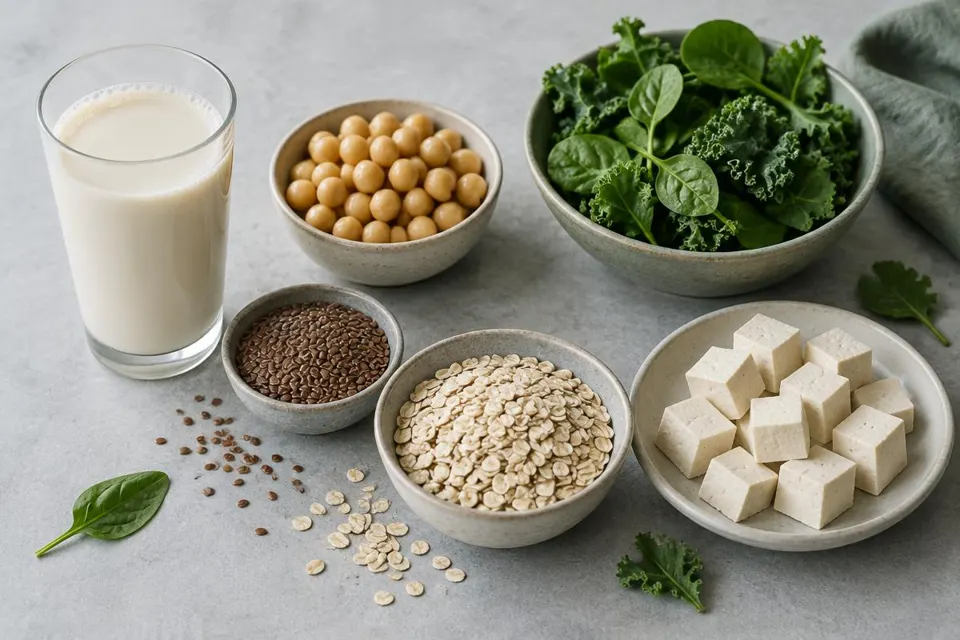
You can memorise nutrient names and still eat inadequately. Start with what you actually eat on an ordinary day, not an idealised table. If breakfast is tea and bread, lunch is salad and dinner is fruit, removing meat has not left an adequate replacement for energy and protein. Beans with bread, lentils with rice and vegetables, or tofu or chickpeas with potatoes offer foundations to build on. Portions, appetite, age and activity matter; one quantity cannot suit everyone.
Fortified foods are not interchangeable. A soy drink may contain more protein than an oat or almond drink, but products differ. Check amounts per serving, not per container, and how you use it. An ordinary plant drink is not a replacement for breast milk or infant formula. Children's diets, including alternatives after weaning and allergies, need age-appropriate guidance; a meal that satisfies an adult can be too bulky and too low in energy for a child.
Reading health risk without exaggeration
IARC's classification describes the strength of evidence that an exposure can cause cancer, not the size of an individual's risk. Processed meat and tobacco being in Group 1 does not mean their risks are equal. Distinguish relative from absolute risk, and observational association from causation. A conclusion about processed meat also cannot be transferred automatically to eggs, dairy or every animal food.
Unfortified plant foods are not a reliable B12 source.
NHS guidance recommends fortified sources or a supplement; prevention differs from treating deficiency.
A planned plant-based diet can be adequate.
This depends on nutrients, energy, life stage and medical circumstances; the label alone is insufficient.
Processed meat's classification means it is as risky as smoking.
The classification does not support this inference; the group concerns evidence strength, not equal risk magnitude.
Before buying another supplement
Keep a list of supplements and medicines, and discuss need and dose with a professional rather than stacking overlapping products. Fatigue, tingling or unintended weight loss deserve assessment, not self-diagnosis as a dietary deficiency. Consult NHS vegan-diet guidance and the WHO meat-and-cancer Q&A.
Research trail
Sources and further reading
- 01Qur'an 2:195 (al-Baqarah) — "do not throw yourselves into destruction" — the base-text for prohibitions on self-harm
- 02Qur'an 4:29 (al-Nisa) — "do not kill yourselves" / "one another" — read by jurists as covering slow self-harm through neglect, not only violence
- 03British Dietetic Association, One Blue Dot and vegan diet fact sheets — UK dietetic professional guidance on planning a plant-based diet safely
- 04NHS, "The vegan diet" (nhs.uk) — UK health-service guidance including supplementation and children
- 05Academy of Nutrition and Dietetics, Position Paper on Vegetarian Diets — historical position paper; current age-appropriate clinical guidance is still needed
- 06Reed Mangels, "Vitamin B12 in the Vegan Diet" (Vegan Health / vRG) — clear, clinically referenced explainer on B12 forms and dosing
- 07EFSA and WHO/FAO Dietary Reference Values — official intake reference ranges for iron, zinc, iodine, calcium, and vitamin D
- 08Ibn Qudama, al-Mughni, on the obligation to eat when refusal risks death — classical fiqh basis for prioritising life and health over voluntary restriction
- 09al-Qaradawi, al-Halal wal-Haram fil-Islam, chapter on food and moderation — modern fiqh discussion of israf, moderation, and bodily rights (haqq al-jasad)
- 10Sahih al-Bukhari 1975, 5199 (reports concerning Abdullah ibn Amr) — "your body has a right over you" — foundational hadith for bodily obligation
- 11Islamic Society of North America (ISNA) Halal Certification guidance on capsule shells — practical explainer on gelatine sourcing and bovine/porcine/fish/plant alternatives
- 12Vegetarian Resource Group, capsule and excipient guides — background on cellulose, gelatine, and vegetarian capsule alternatives used by supplement manufacturers
- 13International Agency for Research on Cancer (IARC) Monograph 114 / WHO Q&A on the carcinogenicity of red and processed meat — the peer-reviewed classification underpinning the well-evidenced claims discussed below
- 14An Open Letter to Shia Muslims on the Livestock Industry, Animal Suffering and Moral and Legal Duty Today (Persian, anonymous) — anonymous advocacy letter, not a fatwa or the product of any named jurist or hawza body; translations on this site are ours
References are given so readers can check them in the primary sources. Hadith gradings and scholarly positions are summarised in good faith; where a text is disputed we say so. Verify before you rely on anything here.
Follow the thread
Continue reading
Share this page