Are Muslims Vegetarian? Halal Diet, Ethics, and Islam
While Muslims are not required to be vegetarian and most consume meat, Islam does not mandate carnivory. Adopting an ethical plant-based diet is entirely compatible with Islamic jurisprudence and prophetic values.
17 min read
The short answer
No, Muslims are not inherently vegetarian, and the overwhelming majority eat meat. However, Islam does not obligate meat consumption. In Islamic jurisprudence, eating meat is categorized as permissible (mubah), not mandatory (wajib). A Muslim may freely adopt a vegetarian or vegan lifestyle for ethical, ecological, or health reasons, provided they do not declare meat religiously forbidden in principle.
Key takeaways
- Meat consumption is categorized in Islamic jurisprudence as permissible (mubah), meaning abstention is entirely lawful and carries no religious penalty.
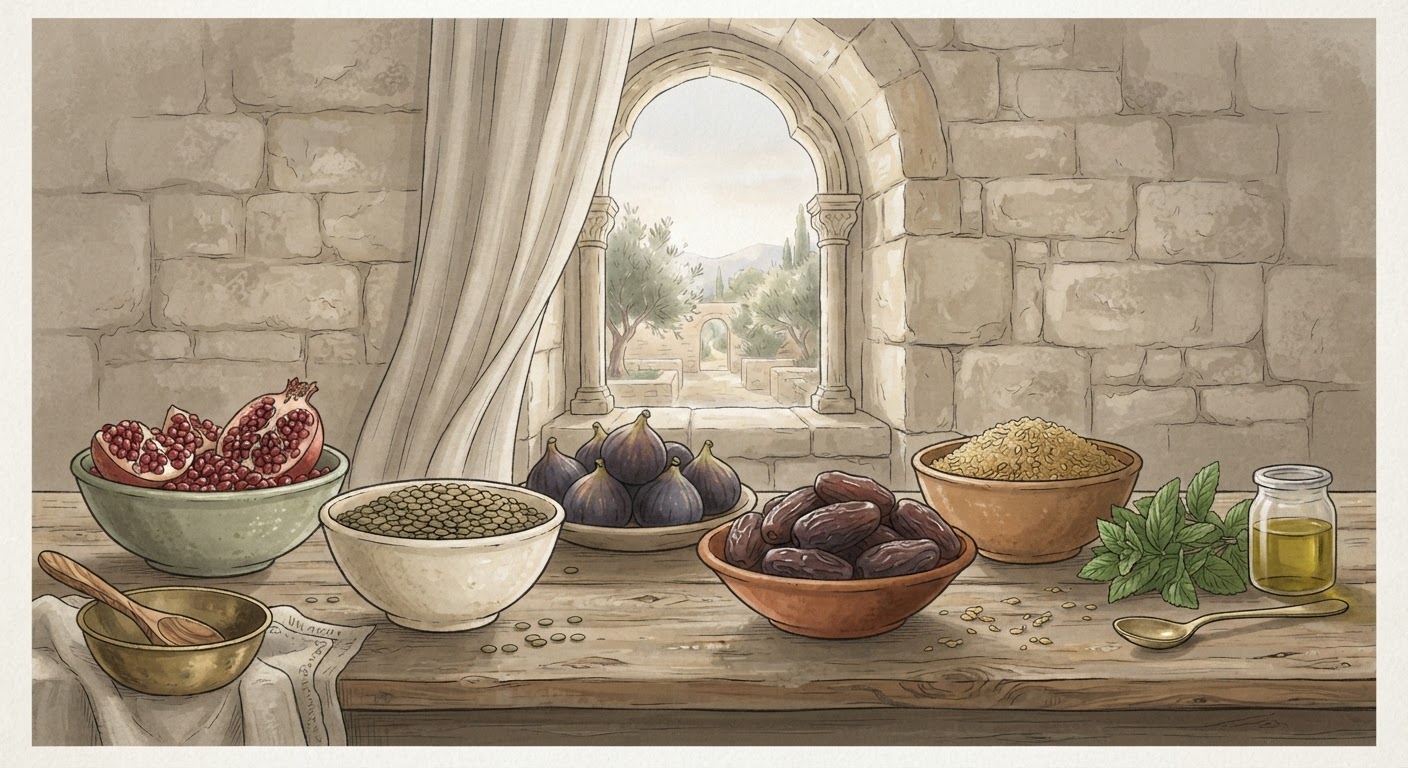
- The Prophet Muhammad (peace be upon him) lived on an overwhelmingly plant-based diet consisting of dates, barley, water, legumes, and greens, consuming meat only occasionally.
- Islamic law requires food to be both halal (ritually permissible) and tayyib (pure, wholesome, and ethically reared), a standard modern industrial feedlots routinely violate.
- Classical and contemporary jurists agree that personal abstention from meat (tark) is distinct from unlawful doctrinal prohibition (tahrim).
- Participation in Eid al-Adha does not mandate personal meat consumption, with scholars across schools recognizing charitable alternatives and non-obligatory classifications.
The Short Answer: Permissibility, Obligation, and Islamic Jurisprudence
When observers ask whether Muslims are vegetarian, the immediate answer is negative: the vast majority of the world's 1.9 billion Muslims consume meat. Meat dishes occupy celebrated positions across Muslim societies, from Moroccan lamb tagines and Turkish kebabs to South Asian biryanis and Indonesian rendang. At festive milestones such as weddings (walimah), births (aqiqah), and the major annual feast of Eid al-Adha, meat serves as a universal cultural symbol of abundance, generosity, and hospitality. Because classical scripture explicitly sanctions the slaughter of specific grazing livestock, animal agriculture has long been integrated into the cultural identities of Muslim populations worldwide.
However, conflating cultural prevalence with religious obligation represents a major theological mistake. In Islamic jurisprudence (usul al-fiqh), all human actions are evaluated through five legal categories: obligatory (fard or wajib), recommended (mustahabb), neutral or permissible (mubah), discouraged (makruh), and forbidden (haram). Classical scholars across the Hanafi, Maliki, Shafi'i, Hanbali, and Ja'fari legal traditions universally classify the eating of meat as mubah. It is a divine dispensation, an allowance granted to humanity, but it is not a religious duty. Nowhere in the Quran or the authenticated prophetic hadith collections is an ordinary believer ordered to consume animal flesh as a requirement of their faith.
Consequently, an individual Muslim possesses total jurisprudential freedom to adopt a vegetarian, pescatarian, or strictly vegan diet. A believer who chooses to subsist entirely on grains, legumes, fruits, and vegetables does not commit any religious transgression. The crucial juristic boundary lies not in what one chooses to put on one's plate, but in the theological framing of that choice: an individual must not declare meat to be universally forbidden (haram) for all people when God has permitted it. So long as a vegetarian Muslim recognizes that meat is fundamentally permissible under divine law, their personal decision to abstain—whether for personal health, compassion toward living beings, or disgust with modern factory farms—rests on firm legal ground. For a broader analysis of how legal allowances function in Islamic thought, see our examination of how <a href="/perspectives/permissible-is-not-required">permissible is not required</a>.
The Prophetic Reality: What Did the Prophet Muhammad Actually Eat?
A widespread cultural misconception among modern believers is the assumption that the Prophet Muhammad (peace be upon him) ate a meat-centric diet. Modern corporate diets often place slaughtered meat at the center of breakfast, lunch, and dinner, and many contemporary Muslims assume their ancestors lived similarly. Yet primary historical sources (sirah) and rigorously authenticated hadith collections reveal that the daily diet of the prophetic household in seventh-century Medina was modest, austere, and predominantly plant-based. The Prophet ate out of survival and gratitude, avoiding excess, and his lifestyle stood in stark contrast to modern hyper-carnivorous habits.
The authentic testimony of his wife, Aisha (may God be pleased with her), provides clear historical documentation of their household routine. In a famous report recorded in Sahih al-Bukhari (hadith 2567) and Sahih Muslim (hadith 2972), Aisha declared to her nephew Urwa ibn al-Zubayr: 'A crescent moon would appear, then another crescent moon, then another crescent moon—three crescents in two months—and no cooking fire would be lit in the houses of the Messenger of Allah.' When Urwa asked what sustained them, she answered: 'The two black substances: dates and water.' When meat was consumed, it was generally provided as an act of hospitality by neighbors, served during communal banquets, or eaten during arduous travels where plant staples were scarce. The everyday staples of the prophetic household were coarse barley bread, vinegar, olive oil, dried dates, pumpkins, melons, and lentils.
Moreover, early Islamic leaders actively warned against treating meat as an everyday entitlement. Caliph Umar ibn al-Khattab recognized the potential for meat consumption to become an addictive habit that dulls spiritual sensitivity and encourages financial waste. His famous decree is preserved in the Muwatta of Imam Malik: 'Beware of meat, for it possesses an addictiveness like the addictiveness of wine.' Historical chronicles record that Umar once observed a man purchasing meat two days in a row and rebuked him publicly, asking whether every desire of the belly had to be instantly indulged. These documented positions illustrate that prophetic piety favored mindful temperance over the routine slaughter of living creatures. To discover more textual evidence on this historical reality, explore our study on <a href="/debates/the-sunnah-and-meat">the Prophet's diet and the Sunnah on meat</a>.
Halal vs. Tayyib: Beyond the Five-Second Mechanical Cut
To understand the growing number of vegetarian Muslims today, one must examine the critical theological distinction between the Quranic concepts of 'halal' (lawful) and 'tayyib' (pure, wholesome, and ethical). Modern commercial halal labeling focuses almost entirely on the narrow mechanical rules of slaughter: verifying that the creature belongs to a permitted species, that the slaughterer belongs to the People of the Book or is Muslim, that the divine name (tasmiyah) is recited, and that the trachea, esophagus, and jugular vessels are severed with a sharp blade (dhabh). While these steps satisfy the technical minimums of ritual slaughter, they frequently ignore the entire lifespan of the animal before it arrives at the abattoir.
The Quran, however, repeatedly couples these two legal qualifiers as an indivisible command. In Surah al-Baqarah (2:168), God addresses all of humanity: 'O mankind, eat from whatever is on earth that is lawful and wholesome (halalan tayyiba), and do not follow the footsteps of Satan. Indeed, he is to you a clear enemy.' Classical exegetes (mufassirun) such as Imam Fakhr al-Din al-Razi and Imam al-Qurtubi emphasized that tayyib signifies food that is untainted by injustice, free from physical or moral harm, clean in its provenance, and pleasant to human dignity. If an animal spends its existence in complete darkness, immobilized in its own waste, subjected to chronic distress, and fed artificial growth agents, can its flesh truly be described as tayyib simply because a ritual incantation accompanied its death?
This tension between procedural compliance and moral integrity has sparked intense debate among modern jurists. Many Muslim scholars now argue that the global commercial halal industry has commodified sacred rites, reducing an expansive ethical framework to a perfunctory checklist that rubber-stamps industrial cruelty. When slaughterhouse speed lines process thousands of chickens per hour or cattle are prodded onto killing floors while terrified by the screams and blood of their peers, the profound prophetic spirit of mercy is compromised. For conscientious believers, this ethical vacuum has transformed ordinary grocery shopping into a moral dilemma, prompting many to abandon commercial animal products entirely. Read our comprehensive analysis on <a href="/foundations/halal-and-tayyib">halal versus tayyib</a> to explore this issue further.
| Ethical Dimension | Classical Shariah Standards | Modern Industrial Concentrated Animal Feeding Operations (CAFOs) |
|---|---|---|
| Living Space & Movement | Access to open grazing, natural pasture, clean air, sunlight, and regular physical mobility. | Extreme indoor confinement in gestation crates, battery cages, and overcrowded mud pens. |
| Bodily Integrity | Strict prophetic prohibition against branding animal faces, docking tails, or bodily disfigurement. | Routine non-anesthetic mutilations: beak trimming for poultry, tail-docking, and horn budding. |
| Maternal Care & Weaning | Explicit ban on separating animal offspring from their mothers before natural weaning. | Immediate maternal separation of dairy calves within hours of birth to maximize commercial fluid milk. |
| Slaughterhouse Protocols | Concealing blades prior to slaughter, resting animals, and forbidding killing in front of conspecifics. | High-speed mechanized lines, pervasive fear, visual exposure to bleeding animals, and high rates of ineffective stuns. |
| Dietary Integrity | Feeding animals pure, natural forage, fresh pasture, clean water, and unadulterated feed. | Diets packed with concentrated animal proteins, prophylactic antibiotics, and unnatural grain rations. |
The Cruelty Debate: Can Industrial Animal Farming Be Islamically Justified?
Over ninety percent of all meat consumed globally—including meat stamped with mainstream halal logos—originates from industrial concentrated animal feeding operations (CAFOs). For many contemporary Muslim ethicists, the fundamental reality of this system directly contradicts the core principles of the Shariah. Foremost among these principles is the universal mandate of rahmah (mercy). In an authenticated narration recorded in Imam al-Bukhari's Al-Adab al-Mufrad (hadith 373), the Prophet Muhammad stated: 'Whoever shows mercy, even to a bird meant for slaughter, God will show mercy to him on the Day of Resurrection.' Confining sentient beings to lifelong misery, depriving them of natural maternal bonding, and denying them basic movement subverts this sacred duty of compassionate treatment.
A second foundational pillar of Islamic law is the universal legal maxim: 'There shall be no harm, nor reciprocal harm' (la darar wa-la dirar). Industrial animal agriculture represents one of the primary drivers of global environmental degradation. According to official assessments by the Food and Agriculture Organization (FAO) of the United Nations, livestock systems generate approximately 14.5 percent of all human-induced greenhouse gas emissions, demand vast quantities of fresh water, and serve as the foremost driver of tropical deforestation and topsoil loss. As designated trustees (khulafa') commanded by God to safeguard the planetary balance (mizan) and forbid corruption upon the earth (fasad fil-ard), Muslims carry a divine obligation to protect ecological systems rather than fund their collapse.
A third legal objection centers on the prohibition of israf (wastefulness and extravagance) and the concept of ihtiyat (scrupulous caution). Cycling tens of billions of tons of edible cereal grains and legumes through livestock to yield a fraction of those calories as meat constitutes an irresponsible waste of natural resources while human communities experience severe food insecurity. Sultan al-Ulama Al-Izz ibn Abd al-Salam, the celebrated seventh-century jurist, codified legal animal rights in his masterwork Qawa'id al-Ahkam fi Masalih al-Anam, asserting that an owner must care for an animal's wellbeing, avoid burdening it beyond its strength, and shelter it from harm. When modern supply chains systematically violate these classical mandates, abstaining from meat becomes an act of principled precaution. Discover the full legal formulation of this argument in our comprehensive overview of <a href="/the-case">the case for ethical food reform</a>.
14.5%
Share of global human-induced greenhouse gas emissions driven by livestock (UN FAO)
75%+
Global agricultural land occupied by livestock grazing and feed crops (UN FAO)
80B+
Terrestrial animals slaughtered worldwide each year in commercial agriculture
70%+
Share of global medically important antibiotics administered to livestock rather than humans
Can a Muslim Choose Not to Eat Meat? The Fiqh of Abstention
When a Muslim decides to adopt a vegetarian lifestyle, they are sometimes challenged by fellow believers who cite Surah al-Ma'idah (5:87): 'O you who have believed, do not forbid the good things which Allah has made lawful to you and do not transgress. Indeed, Allah does not like transgressors.' Some deduce from this verse that refusing meat is an arrogant repudiation of divine gifts. However, classical exegetes and legal scholars have analyzed the specific context of this revelation (asbab al-nuzul): the verse addressed a small group of companions, including Uthman ibn Maz'un, who resolved to take vows of lifelong monastic celibacy, fast every day without break, and religiously forbid themselves the consumption of meat as an act of extreme asceticism.
Islamic jurisprudence draws an unequivocal, bright-line distinction between doctrinal prohibition (tahrim) and personal voluntary abstention (tark). Tahrim involves claiming legislative authority that belongs solely to God, asserting that an item is spiritually defiling or that consuming it incurs divine punishment. Tark, by contrast, is a person's voluntary decision to refrain from a permissible item due to personal preference, health needs, ethical objections to the supply chain, or sensory aversion. The Prophet Muhammad himself practiced personal dietary abstention without issuing theological bans. When offered roasted spiny-tailed lizard (dabb), he declined to eat it, explaining: 'It was not the food of my people, and I find myself disliking it' (Sahih al-Bukhari 5391; Sahih Muslim 1946). He permitted his companion Khalid ibn al-Walid to consume it, demonstrating that personal refusal does not mean declaring a food unlawful.
Furthermore, the Islamic historical record is punctuated by prominent figures who embraced plant-based lives without being branded as heretics. The revered early Sufi saint Rabia al-Adawiyya was celebrated for her radical compassion toward animals and her complete abstention from meat and animal fats. Similarly, the brilliant eleventh-century philosopher and Arab poet Abu al-Ala al-Ma'arri practiced a strict vegan diet for decades, decrying animal slaughter and the theft of honey and milk in his moving verse. In both Sunni and Shia traditions, contemporary Grand Ayatollahs and muftis have clarified that vegetarianism is entirely lawful provided the practitioner does not claim meat is haram in the divine law. Read more about this jurisprudential consensus in our practical guide on <a href="/guides/can-muslims-be-vegan">whether Muslims can be vegan</a>.
Ritual Sacrifices and Eid al-Adha: Navigating Qurbani on a Plant-Based Diet
The most significant challenge for vegetarian Muslims centers around the annual festival of Eid al-Adha and the ritual sacrifice known as Udhiyya (or Qurbani). Commemorating the Prophet Ibrahim's willing obedience to sacrifice his son before God provided a ram in his place, this ceremony features the slaughter of sheep, goats, cattle, or camels. Many assume that because this rite is a central part of Islamic worship, plant-based living is fundamentally incompatible with being an observant Muslim. However, examining the classical jurisprudence surrounding Udhiyya reveals considerable nuance and legal diversity.
First, the overwhelming majority of classical Sunni scholars—including the Maliki, Shafi'i, and Hanbali schools of jurisprudence—as well as the Ja'fari school, classify Udhiyya not as an absolute individual duty (fard 'ayn), but as an emphasized sunnah (sunnah mu'akkadah). It is a highly recommended practice for those who possess the means, but its omission does not incur a sin. Only the Hanafi school regards the practice as mandatory (wajib) upon financially qualifying resident adults. Authentic historical traditions document that the foremost companions of the Prophet, including the first two Caliphs, Abu Bakr al-Siddiq and Umar ibn al-Khattab, intentionally omitted the animal sacrifice for several consecutive years out of fear that the public would mistake it for an obligatory pillar of Islam (Sunan al-Bayhaqi 9/265).
Second, even when an individual chooses to perform the sacrifice in accordance with prophetic traditions, Islamic law never mandates that the individual consume the meat themselves. Surah al-Hajj (22:37) makes clear: 'Their meat will not reach Allah, nor will their blood, but what reaches Him is piety from you.' Many vegetarian Muslims choose to sponsor an ethically reared, free-range sacrifice in regions affected by severe food poverty or refugee crises, where families face acute malnutrition. In doing so, they provide essential nourishment to vulnerable populations while continuing their personal plant-based practice at home. For an in-depth breakdown of legal positions and humane alternatives, read our guide on <a href="/debates/qurbani-and-eid-al-adha">Qurbani and Eid al-Adha</a>.
Navigating Family, Community, and Culture as a Plant-Based Muslim
In practice, the obstacles facing vegetarian Muslims are cultural and social rather than theological. Muslim family culture places tremendous emphasis on hospitality (ikram al-dayf), honoring visitors, and sharing celebratory meals. For generations, serving rich meat dishes has served as a tangible expression of generosity, prosperity, and respect. When a family member suddenly declines the aunt's slow-cooked lamb curry or grandmother's chicken biryani, elders may interpret the refusal as an insult, a rejection of heritage, or an embrace of alien cultural trends. Parents often worry about their children's physical wellbeing, assuming a meatless diet leads to nutritional deficiencies.
Overcoming these social barriers requires diplomacy, emotional generosity, and culinary skill. Rather than adopting an aloof or judgmental posture, vegetarian Muslims can demonstrate that traditional Islamic culinary heritage is filled with plant-rich foods. Classic traditional cuisines feature celebrated dishes like Egyptian koshari, Levantine mujadara, Palestinian lentil shorba, Turkish stuffed grape leaves (sarma), Persian herb frittatas and bean stews (ghormeh sabzi), and South Asian chana masala and daal. Offering to prepare and bring hearty, flavorful plant-based dishes to family feasts and community Ramadan iftars shows that plant-forward eating is an abundant celebration of divine bounty rather than a joyless restriction.
When discussing dietary choices with family and community leaders, shifting the vocabulary from modern secular arguments to traditional Islamic concepts bridges the cultural divide. Rather than speaking exclusively in Western activist idioms, articulate your lifestyle using Islamic ethical categories: prophetic moderation, cultivating mercy toward the vulnerable, avoiding wastefulness (israf), and protecting health. When framed through the lens of traditional values, plant-based living is recognized not as an abandonment of heritage, but as a sincere effort to live up to the highest standards of our faith. For actionable advice on navigating these sensitive conversations, consult our resource on <a href="/practice/family-and-community">family and community conversations</a>.
- Cook and share: Bring generous, flavorful plant-based dishes to family potlucks and Eid feasts so relatives see that vegetarian dining is delicious and celebratory.
- Use Islamic vocabulary: Discuss your choices through established concepts like rahmah (mercy), tayyib (wholesomeness), israf (wastefulness), and khilafah (stewardship).
- Honor your elders' generosity: Never insult food prepared with love; express sincere gratitude for their hospitality while gently declining the meat portions.
- Offer reassurance on nutrition: Reassure anxious parents by maintaining strong personal health, balanced nutrition, and regular wellness habits.
Reclaiming the Merciful Plate: Plant-Based Living as Khilafah and Ibadah
Are Muslims vegetarian? As a global religious community, the answer remains no. Yet can a Muslim be vegetarian—and can that choice be transformed into an act of heartfelt Islamic devotion? The answer is an unequivocal yes. As humanity confronts the interconnected crises of industrial animal exploitation, environmental degradation, deforestation, and lifestyle-related disease, returning to a plant-forward diet represents a meaningful alignment with Islamic principles. Choosing plant-based living is not an abandonment of Islamic tradition; it is a revitalization of its central ethical imperatives.
By actively disengaging from the cruelties of modern industrial feedlots, a Muslim honors the true spirit of the Sunnah: a lifestyle rooted in humility, ecological sensitivity, and restraint. Islam does not encourage believers to passively consume whatever products an industrial supply chain places before them with a commercial halal label. Rather, our tradition invites believers to reflect critically on what they consume: where did this food come from, how was this living creature treated, and what footprint does this meal leave upon God's earth?
Embracing plant-based eating does not require judging fellow Muslims who eat ethically raised, pasture-grazed meat. It is about striving toward moral consistency within our own lives. By embracing food that is genuinely halal and unequivocally tayyib, we fulfill our responsibilities as trustees of the earth (khulafa') and uphold the prophetic legacy of kindness to all created beings. In doing so, our daily meals become more than biological fuel: they turn into an active practice of worship (ibadah) that honors the sacred covenant between the Creator and creation.
Frequently asked questions
Is eating meat mandatory for Muslims?
No, eating meat is not mandatory. In Islamic jurisprudence, meat consumption is categorized as permissible (mubah), not obligatory (wajib). Muslims have full religious liberty to follow a vegetarian or vegan lifestyle.
Is vegetarianism haram (forbidden) in Islam?
No, vegetarianism is not haram. Personal abstention from meat for ethical, health, or environmental reasons is completely lawful. It only becomes problematic if someone claims meat is inherently sinful or prohibited by divine law.
What did the Prophet Muhammad usually eat?
The Prophet Muhammad (peace be upon him) consumed an overwhelmingly plant-based diet consisting of dates, barley bread, water, olive oil, vinegar, cucumbers, and lentils. Meat was an infrequent luxury consumed primarily on special occasions.
How can a vegetarian Muslim observe Eid al-Adha?
A vegetarian Muslim can fulfill their Eid devotion by sponsoring an ethically raised sacrifice distributed entirely to impoverished communities abroad, or by following the majority legal position (Maliki, Shafi'i, Hanbali) that Udhiyya is an emphasized sunnah rather than a mandatory individual duty.
Why do some scholars argue factory-farmed meat violates Islamic principles?
Many scholars argue that industrial animal farming violates core Islamic principles: the requirement of mercy (rahmah), the mandate for wholesome food (tayyib), the prohibition against causing harm (la darar), and the ban on environmental corruption (fasad fil-ard).
What is the difference between halal and tayyib?
Halal denotes that which meets the minimum legal criteria of ritual slaughter and permissible species. Tayyib is a broader Quranic requirement demanding that food be wholesome, ethical, clean, and free from cruelty or injustice throughout its production.
Were there historical Muslim vegetarians or vegans?
Yes. Prominent historical Muslims who abstained from animal products include the celebrated eighth-century mystic Rabia al-Adawiyya and the eleventh-century Arab philosopher and poet Abu al-Ala al-Ma'arri.
This article explains a debated question. Discuss rulings with a qualified scholar you trust.
Sources
- The Holy Quran (Surah al-Baqarah 2:168, Surah al-Ma'idah 5:87, Surah al-Hajj 22:37) — Quran.com
- Sahih al-Bukhari (Hadiths on the Household Diet of the Prophet 2567, 5391) — Sunnah.com
- Muwatta Imam Malik (Kitab al-Sifa'at al-Nabi, Report on Meat Addiction) — Sunnah.com
- Al-Adab al-Mufrad (Hadith 373 on Mercy Toward Slaughtered Animals) — Sunnah.com
- Tackling Climate Change Through Livestock: A Global Assessment of Emissions and Mitigation Opportunities — Food and Agriculture Organization of the United Nations (FAO)
- Animal Welfare in Islam — The Islamic Foundation. Authored by Al-Hafiz Basheer Ahmad Masri, pioneering twentieth-century work on Islamic animal ethics
- Qawa'id al-Ahkam fi Masalih al-Anam (Rules of Legal Judgments in the Interests of Mankind and Animals) — Dar al-Qalam. Authored by Sultan al-Ulama Al-Izz ibn Abd al-Salam, codifying classical Shariah animal rights
- Global Antimicrobial Use in Livestock — World Health Organization (WHO)